
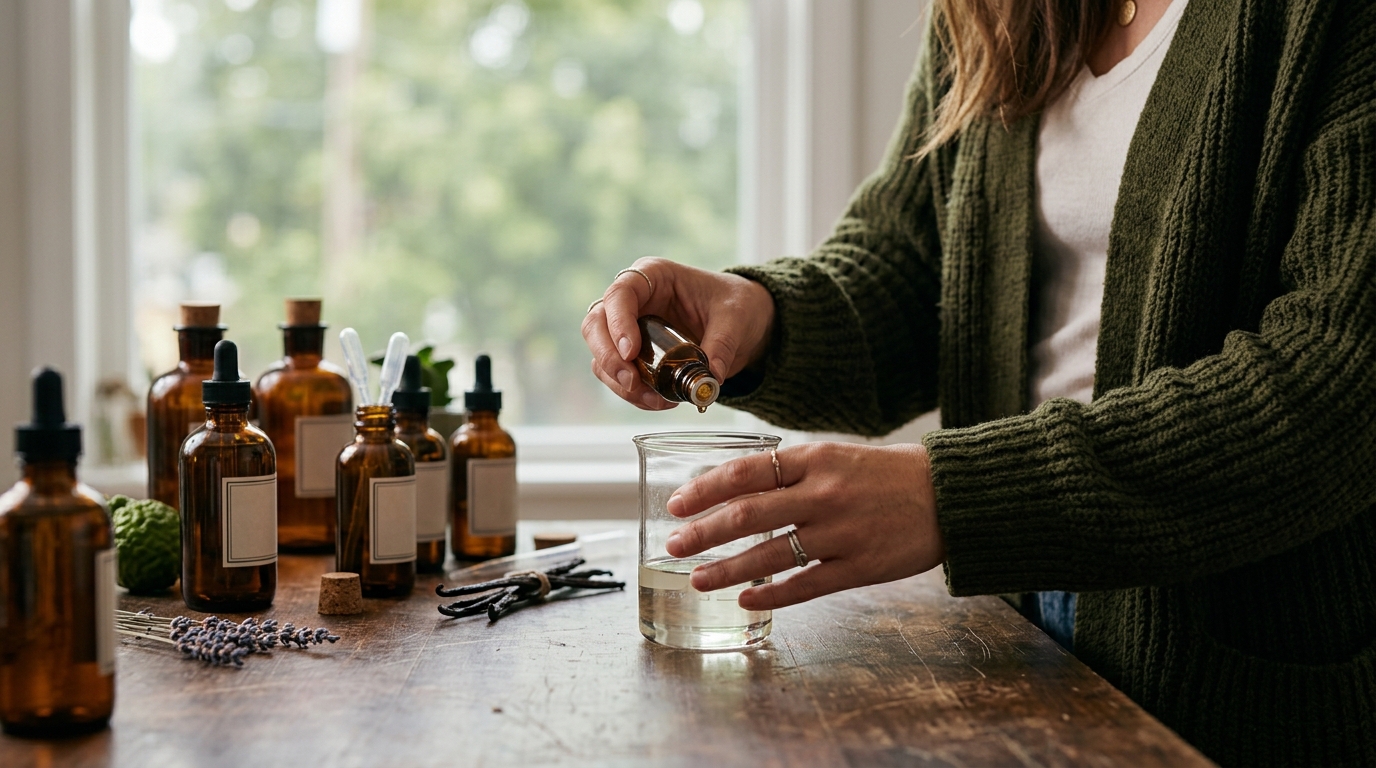
Creating custom fragrance blends allows you to design unique scents that stand out in the crowded market of handmade goods. According to recent industry data, the global fragrance market is projected to reach significant growth by 2026, driven largely by the demand for personalized and artisanal products. This surge indicates that consumers are increasingly seeking authenticity and uniqueness in their home care items. By mastering the art of blending, you can offer exclusive scents that resonate with your specific brand identity. (Collections 124 makesy)
Understanding Fragrance Oils and Essential Oils
Before you begin blending, it is crucial to understand the two primary categories of scent ingredients. Fragrance oils are synthetic or semi-synthetic compounds designed to mimic natural scents or create entirely new aromas. They offer consistency and a wide variety of scent profiles that are often not possible with natural ingredients alone. On the other hand, essential oils are concentrated hydrophobic liquids containing volatile aroma compounds from plants. They provide natural alternatives but can be more expensive and less stable in certain products.
When sourcing your materials, consider the reliability of your supplier. Makesy offers a comprehensive catalog of high-quality fragrance oils and essential oils tailored for DIY enthusiasts. You can explore their fragrance collection to find oils that match your creative vision. Additionally, understanding the difference between these two types will help you decide which is best for your specific product line.
The Basics of Blending: Top, Middle, and Base Notes
Perfumery is built on the concept of scent notes, which evaporate at different rates. This structure ensures that your fragrance lasts and evolves over time. Top notes are the initial scents perceived immediately after application. They are light, fresh, and evaporate quickly. Common top notes include citrus fruits like lemon and bergamot.
Middle notes, also known as heart notes, emerge after the top notes fade. They form the core of the fragrance and last longer. Floral and spicy scents are typical middle notes. Base notes are the deepest and longest-lasting scents. They provide depth and stability to the blend. Ingredients like vanilla, musk, and sandalwood are common base notes.
To create a balanced blend, you must combine these notes effectively. A common starting ratio is 30% top notes, 50% middle notes, and 20% base notes. However, this can vary based on the desired intensity and longevity. You can find detailed guides on perfumery techniques to refine your blending skills.
Selecting Your Bases: Wax, Soap, and Lotion
The base product you choose will significantly impact how your fragrance performs. Different bases have different flash points and chemical properties that affect scent throw. For candle makers, the type of wax is critical. Paraffin wax is known for its excellent scent throw, holding and releasing fragrance effectively. Soy wax, while popular for its natural appeal, may require specific fragrance loadings to achieve the same intensity.
For soap makers, cold process and melt-and-pour bases react differently to fragrance oils. Some oils can cause soap to accelerate or discolor. It is essential to test small batches before committing to a full production run. Makesy provides high-quality wax options that are optimized for various fragrance loads. You can also check their cold process soap resources for specific advice on fragrance compatibility.
The Formulation Process: Ratios and Testing
Creating a custom blend requires precision and patience. Start by weighing your fragrance oils using a digital scale. Accuracy is key to replicating your formula later. Mix your oils in a separate container before adding them to your base product. This ensures even distribution and prevents clumping.
When adding fragrance to your base, follow the recommended fragrance load percentage. For candles, this is typically between 6% and 10%. For soaps, it can range from 3% to 6%. Adding too much fragrance can lead to issues like sweating or poor burn quality. You can learn more about fragrance usage rates in their help center.
Testing is the most important step. Create small batches and allow them to cure or set completely. Evaluate the scent throw, longevity, and overall appeal. Adjust your ratios as needed until you achieve the desired result. This iterative process is essential for developing a signature scent.

Safety and Compliance in Fragrance Blending
Safety is paramount when working with fragrance oils and essential oils. Some ingredients can cause skin irritation or allergic reactions. Always consult the Safety Data Sheets (SDS) for each oil you use. These documents provide critical information on handling, storage, and usage limits.
Additionally, ensure that your products comply with local regulations. In the United States, the International Fragrance Association (IFRA) sets standards for fragrance safety. You can find more information on IFRA standards to ensure your blends are safe for consumers. Proper labeling and disclosure are also required to inform customers about the ingredients in your products.
Key Takeaways
- Understand the difference between fragrance oils and essential oils to choose the right ingredients for your products.
- Balance your blends using top, middle, and base notes for a complex and lasting scent profile.
- Select bases that are compatible with your fragrance oils to maximize scent throw and product stability.
- Always test small batches and adjust ratios to perfect your custom fragrance formula.
- Consult Safety Data Sheets and IFRA standards to ensure the safety and compliance of your blends.
- Use reliable suppliers like Makesy to access a wide range of high-quality fragrance oils and supplies.
- Document your formulas meticulously to replicate successful blends in future production runs.
Frequently Asked Questions
What is the difference between fragrance oils and essential oils?
Fragrance oils are synthetic or semi-synthetic scents designed for consistency and variety, while essential oils are natural extracts from plants that offer therapeutic benefits but can be less stable.
How do I determine the correct fragrance load for my candles?
The fragrance load depends on the type of wax used. Paraffin wax typically supports 6-10% fragrance load, while soy wax may require specific testing to determine the optimal percentage for maximum scent throw.
Can I blend essential oils with fragrance oils?
Yes, you can blend essential oils with fragrance oils to create unique scent profiles. However, you must consider the different evaporation rates and potential interactions with your base product.
Where can I find Safety Data Sheets for fragrance oils?
Safety Data Sheets are typically available from the manufacturer or supplier. Makesy provides SDS for their products, which you can access through their help center or product pages.
How long should I let my blended products cure?
Curing times vary by product. Candles may need 1-2 weeks to fully cure, while soaps can take 4-6 weeks. Proper curing ensures the fragrance is fully integrated and the product performs as expected.
What are top, middle, and base notes?
Top notes are the initial scents that evaporate quickly, middle notes form the heart of the fragrance, and base notes are the deep, long-lasting scents that provide depth and stability.
How can I ensure my custom fragrance is safe for consumers?
Consult the IFRA standards and the Safety Data Sheets for each ingredient. Ensure your usage rates are within safe limits and conduct patch tests if applicable.
Start Creating Your Signature Scents Today
Creating custom fragrance blends is a rewarding process that allows you to express your creativity and build a unique brand. By understanding the basics of perfumery, selecting the right materials, and prioritizing safety, you can develop high-quality products that delight your customers. Visit Makesy to explore their extensive collection of fragrance oils, waxes, and supplies. Start your blending journey today and discover the art of custom fragrance creation.