

The global candle market is experiencing a significant surge in demand, with industry reports indicating that the sector is projected to grow at a compound annual growth rate of over 4% through 2030. This expansion is driven largely by the rise of the home fragrance industry and the DIY craft movement. For aspiring artisans and established brands alike, sourcing high-quality materials is the critical first step in creating professional-grade products. Finding a reliable supplier that offers everything from premium wax to specialized wicks can streamline your production process and ensure consistency in your final output. (Collections 124 makesy)
Understanding Essential Candle Making Supplies
Before you can start pouring, you must understand the core components that make up a candle. Paraffin wax is a petroleum-derived wax that is widely used for its excellent scent throw and affordability. It is often the go-to choice for mass production due to its consistent burn properties. However, many modern makers prefer natural alternatives for their eco-friendly appeal. (Cart)
Soy wax is a natural wax made from hydrogenated soybean oil that offers a clean burn and excellent fragrance retention. It is biodegradable and renewable, making it a favorite among sustainable brands. Another popular option is beeswax is a natural wax produced by honeybees that burns longer and cleaner than most other waxes. While more expensive, it produces a natural honey scent and does not require added fragrances to smell pleasant.
Wicks are equally critical. The wrong wick can cause tunneling, sooting, or an uneven burn. You must match the wick type and size to the wax type and container diameter. Cotton wicks are the most common, but wood wicks are gaining popularity for their crackling aesthetic. Essential oils and fragrance oils provide the scent profile, with fragrance oils offering a wider variety of synthetic scents and essential oils providing natural aromatherapy benefits.
Choosing the Right Online Supplier
When searching for where to buy candle making supplies online, reliability and product variety are paramount. A top-tier supplier should offer a comprehensive catalog that includes everything from raw materials to finished vessels. This eliminates the need to coordinate with multiple vendors, saving time and reducing shipping costs.
Look for suppliers that provide detailed product specifications, including flash points for fragrances and burn times for wicks. Educational resources are also a significant value-add. Suppliers that offer tutorials, safety guidelines, and customer support help new makers avoid common pitfalls. For instance, understanding the difference between cold throw and hot throw is essential for formulating the perfect candle.
Customer reviews and industry reputation serve as strong indicators of a supplier's quality. Established companies often have years of experience in the craft supply industry, which translates to better product curation and customer service. Additionally, check for membership programs or loyalty rewards that can reduce costs over time. Some platforms offer expedited shipping options for urgent orders, which is crucial when managing production deadlines.
Key Product Categories to Source
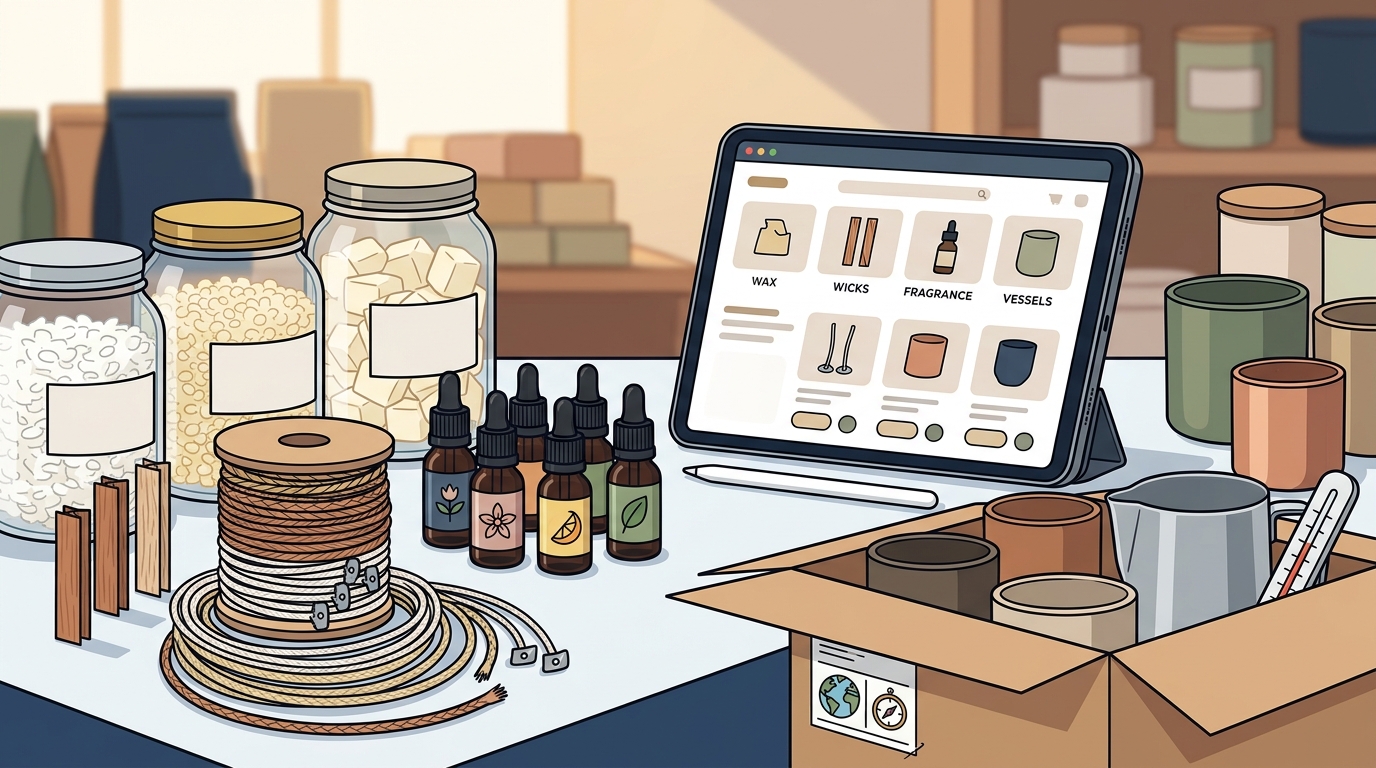
A complete candle making kit typically includes several distinct categories. Below is a breakdown of the essential items you will need to source.
| Category | Description | Key Considerations |
|---|---|---|
| Waxes | Paraffin, Soy, Beeswax, Coconut blends | Burn time, scent throw, melting point |
| Wicks | Cotton, Wood, Paper-core | Wax type compatibility, container size |
| Fragrances | Fragrance oils, Essential oils | Flash point, load capacity, allergen info |
| Vessels | Glass jars, Tin tins, Concrete molds | Heat resistance, aesthetic appeal |
| Additives | Dyes, UV inhibitors, Stearic acid | Color stability, burn enhancement |
When sourcing these items, ensure that the supplier provides data sheets for each product. For example, fragrance oils have a specific maximum load percentage, which determines how much scent can be safely added to the wax without causing leakage or fire hazards. Similarly, wick manufacturers provide burn charts that help you select the correct wick size for your specific jar diameter.
Shipping and Logistics Considerations
Shipping costs can significantly impact the profitability of your candle business, especially when dealing with heavy items like wax and glass vessels. Many online suppliers offer free domestic shipping on orders over a certain threshold, such as $199. This can help you manage your budget more effectively by consolidating purchases.
For urgent orders, look for suppliers that offer expedited shipping options. Some platforms partner with logistics providers to offer 2-day shipping for a small monthly fee. This can be particularly useful when you are running low on critical supplies and need to restock quickly to meet production demands. Additionally, check if the supplier offers will-call pickup options if you have a local warehouse or studio.
International shipping is another factor to consider. If you are sourcing from outside your country, be aware of potential customs duties and import taxes. Some suppliers specialize in international shipping and handle the logistics for you, making it easier to access high-quality materials regardless of your location. Always verify the shipping policy before placing a large order to avoid unexpected costs.
Safety Standards and Compliance
Safety is the most important aspect of candle making. All materials used must meet specific safety standards to ensure the candle burns safely. Flash point is the lowest temperature at which a liquid can form an ignitable mixture in air. Understanding this metric is crucial when handling fragrance oils and other chemicals.
Suppliers should provide safety data sheets (SDS) for all their products. These documents outline the handling, storage, and disposal requirements for each item. For example, some dyes may require specific ventilation during use, while certain waxes may need to be stored in a cool, dry place to maintain their quality.
Additionally, consider the environmental impact of your supplies. Many consumers prefer candles made from natural, biodegradable materials. Suppliers that offer eco-friendly options, such as soy wax and cotton wicks, can help you appeal to this growing market segment. Always verify the sustainability claims of your suppliers to ensure they align with your brand values.
Key Takeaways
- Market Growth: The candle industry is projected to grow at over 4% annually through 2030, driven by DIY trends.
- Wax Types: Paraffin, soy, and beeswax are the primary options, each with distinct burn and scent properties.
- Supplier Variety: Choose a supplier that offers a comprehensive catalog to streamline your sourcing process.
- Shipping Costs: Look for free shipping thresholds and expedited options to manage logistics effectively.
- Safety First: Always review safety data sheets and understand flash points for all chemical products.
- Eco-Friendly Options: Soy and beeswax are popular choices for sustainable candle making.
- Community Support: Suppliers with educational resources and customer support are invaluable for new makers.
Frequently Asked Questions
What is the best wax for beginners?
Soy wax is often recommended for beginners because it is easy to work with, has a low melting point, and offers a clean burn. It is also widely available from most online suppliers.
How do I choose the right wick size?
Wick size depends on the wax type and the diameter of your container. Most suppliers provide wick charts that recommend specific sizes based on these factors. Testing is always recommended to ensure a proper burn.
Can I use essential oils in candles?
Yes, but essential oils have a lower flash point than fragrance oils, which can affect the scent throw. You may need to use a higher load percentage or blend them with other waxes for optimal performance.
What is the difference between cold throw and hot throw?
Cold throw refers to the scent strength when the candle is unlit, while hot throw is the scent strength when the candle is burning. Both are important for customer satisfaction.
Do you offer free shipping?
Many online suppliers offer free domestic shipping on orders over a certain amount, typically $199. Check the specific supplier's policy for details.
Where can I find candle making tutorials?
Many suppliers provide educational resources, including video tutorials and blog posts, to help you learn the craft. You can also find comprehensive guides on their help centers.
Are there subscription options for supplies?
Some suppliers offer subscription boxes or membership programs that provide regular deliveries of supplies at a discounted rate. This can be a convenient way to restock consistently.
Start Your Candle Business Today
Now that you know where to buy candle making supplies online, it is time to start creating. Whether you are making candles for personal use or launching a commercial brand, having access to high-quality materials is essential. Explore the full range of candle making supplies to find everything you need in one place. From premium waxes to vibrant dyes, makesy.com offers the tools and resources to help you succeed in the craft. Visit our help center for additional tips and guidance as you begin your journey.