
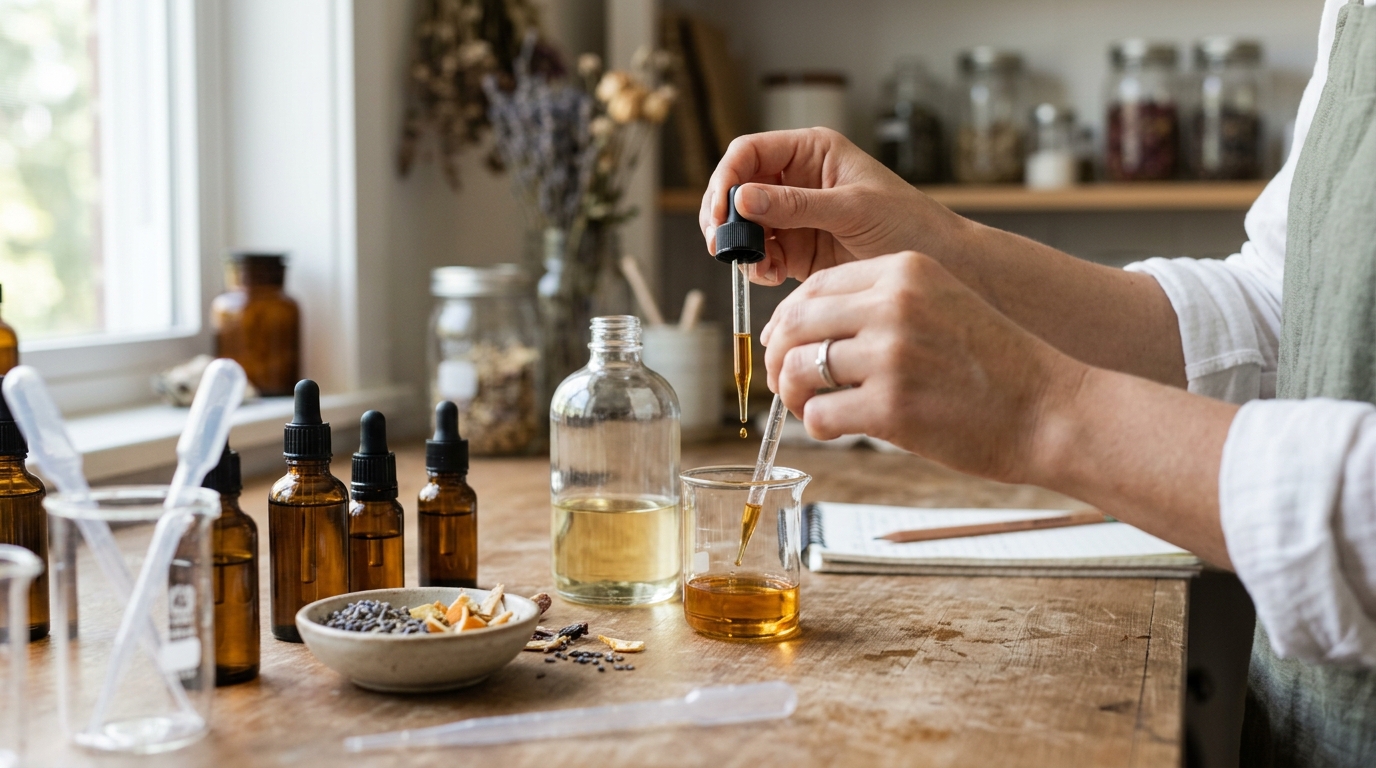
Creating custom fragrance blends allows you to design unique scents that elevate your homemade candles, soaps, and lotions. According to industry data, the global fragrance market continues to expand, with consumers increasingly seeking personalized and artisanal products over mass-produced alternatives. This shift drives demand for makers who understand the chemistry and artistry of scent layering. By mastering the basics of fragrance oils, essential oils, and blending ratios, you can produce professional-grade aromas that resonate with your audience. (Collections 124 makesy)
Understanding Fragrance Types
Before you begin mixing, you must understand the two primary categories of scenting agents available to makers. The distinction between these types dictates their usage, safety profile, and final scent throw. (Makesy Best Selling DIY)
Fragrance oils are synthetic or semi-synthetic compounds designed specifically for candle and soap making. These oils are engineered for stability, meaning they will not degrade or separate in your base materials. They offer a vast array of scent profiles, from complex gourmands to fresh florals, that are often impossible to replicate with natural ingredients alone. For makers seeking consistency and longevity in their products, fragrance oils are the industry standard. (Cart)
Essential oils are concentrated hydrophobic liquids extracted from plants. These natural alternatives provide therapeutic benefits and a pure, organic scent profile. However, they are more volatile and can be expensive. Some essential oils, like citrus, may oxidize quickly, while others, like sandalwood, are incredibly costly. Understanding the difference helps you choose the right tool for your specific product line.
At Makesy, we provide a curated selection of both fragrance oils and essential oils to ensure you have the highest quality ingredients for your creations. You can explore our fragrance collection to find scents that match your brand identity.
Selecting Your Bases
The base material you choose for your homemade product significantly impacts how a fragrance performs. A scent that smells wonderful in a room spray may fail completely in a soy candle. This is due to the different chemical interactions between the fragrance oil and the carrier.
When working with wax-based products, such as candles or wax melts, you need a fragrance oil with a high flash point. This ensures the scent does not evaporate during the pouring process. The fragrance load, typically between 6% and 10% of the total wax weight, determines the strength of the scent throw. Overloading wax can lead to poor burning characteristics, so it is crucial to stay within manufacturer guidelines.
For water-based products, like room sprays or lotions, you must use a solubilizer. Fragrance oils do not mix with water, so without a proper emulsifier, your product will separate. Makesy offers a range of skin and hair care additives that help stabilize your blends and ensure a smooth, professional finish.
Always test your fragrance in the specific base you intend to use. A small batch test can save you from ruining a large production run. Check our help center for detailed guides on wax compatibility and fragrance load percentages.
Blending Techniques
Creating a custom blend is both a science and an art. It requires an understanding of scent notes and how they interact over time. Most professional perfumers use a pyramid structure to build their fragrances.
The top notes are the first scents you perceive. They are light, volatile, and evaporate quickly. Common top notes include citrus, herbs, and light florals. These notes create the initial impression of your blend.
The middle notes, or heart notes, emerge after the top notes fade. They form the core of the fragrance and last longer. Floral, spicy, and fruity scents often serve as middle notes. These notes provide body and complexity to the blend.
The base notes are the foundation of the fragrance. They are heavy, rich, and long-lasting. Woods, musks, and resins are common base notes. They help anchor the lighter scents and extend the overall longevity of the aroma.
To create a balanced blend, start with a base note, add a middle note, and finish with a top note. A common starting ratio is 30% base, 50% middle, and 20% top. Adjust these ratios based on your desired scent profile. Use a blending kit to experiment with small quantities before committing to a larger batch.
Testing and Safety
Safety is paramount when working with concentrated fragrance oils. Always wear protective gear, including gloves and goggles, to prevent skin irritation or eye damage. Work in a well-ventilated area to avoid inhaling excessive fumes.
Before selling your products, you must ensure they are safe for consumer use. This involves checking the IFRA (International Fragrance Association) standards for each fragrance oil. IFRA standards dictate the maximum safe usage rates for different product categories. Makesy provides IFRA certificates for all our fragrance oils to help you stay compliant.
Conduct a hot throw test for candles by burning a small sample and evaluating the scent dispersion. For soaps, perform a cold process test to see if the fragrance accelerates the trace or causes separation. These tests are essential for quality control and customer satisfaction.
Pricing Strategy
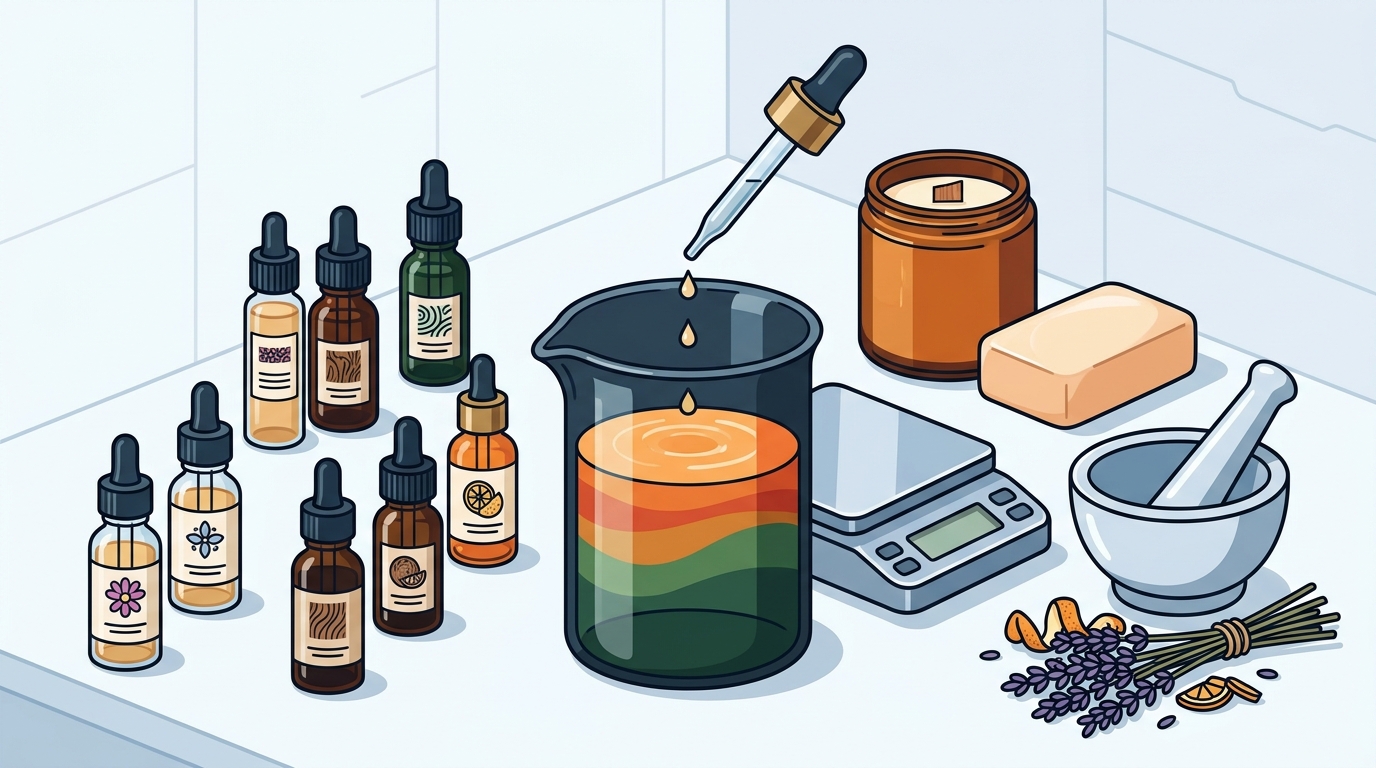
Pricing your custom fragrance products requires a careful calculation of costs, including materials, labor, and overhead. Fragrance oils can be expensive, so factor in the cost per ounce of the final product.
Consider the perceived value of your custom blend. Unique, handcrafted scents can command a higher price point than generic alternatives. Use high-quality packaging to enhance the unboxing experience and justify the premium.
Makesy offers discounts and promotions on bulk fragrance purchases, helping you reduce costs as you scale your business. Additionally, our MakerPro program provides exclusive benefits for serious makers, including faster shipping and dedicated support.
Key Takeaways
- Fragrance oils offer stability and a wide variety of scents, making them ideal for consistent product lines.
- Essential oils provide natural alternatives but require careful handling due to volatility and cost.
- Understanding scent notes (top, middle, base) is crucial for creating balanced and complex blends.
- Always test your fragrance in the specific base material before full production to ensure performance.
- Compliance with IFRA standards is mandatory for safety and legal selling of fragrance products.
- Bulk purchasing through programs like MakerPro can significantly reduce your cost of goods sold.
- Quality packaging enhances the perceived value of your custom scents and supports brand identity.
Frequently Asked Questions
Can I mix essential oils and fragrance oils?
Yes, you can mix essential oils and fragrance oils to create unique scent profiles. However, you must ensure that the final blend is stable in your chosen base material and complies with IFRA safety standards for the intended use.
How do I determine the correct fragrance load for my candles?
The correct fragrance load depends on the type of wax you are using. Soy wax typically holds 6-10% fragrance, while paraffin can hold up to 12%. Always refer to the wax manufacturer's guidelines to prevent issues like poor throw or seepage.
What is the difference between a hot throw and a cold throw?
A cold throw is the scent strength of the product when it is unlit. A hot throw is the scent dispersion when the product is burning. A good fragrance oil will have a strong hot throw, ensuring the scent fills the room.
Do I need a solubilizer for room sprays?
Yes, fragrance oils do not mix with water. You must use a solubilizer, such as polysorbate 20 or a specialized spray solubilizer, to ensure the fragrance is evenly distributed in your room spray.
How can I store my custom fragrance blends?
Store your fragrance blends in a cool, dark place away from direct sunlight and heat. This helps preserve the scent integrity and prevents oxidation. Airtight containers are essential for long-term storage.
Are there any safety precautions for blending?
Always wear gloves and eye protection when handling concentrated fragrance oils. Work in a well-ventilated area and avoid skin contact. If you have sensitive skin, consider using a barrier cream.
Where can I find IFRA certificates for Makesy products?
IFRA certificates are available in the Makesy Help Center under the product details for each fragrance oil. You can also contact our support team for specific documentation.
How do I price my custom scented products?
Calculate your total costs, including materials, labor, and overhead, then add a profit margin. Research competitor pricing for similar products to ensure your price is competitive yet reflective of your quality.
Start Blending Today
Creating custom fragrance blends is a rewarding journey that allows you to express your creativity and build a unique brand. With the right tools, knowledge, and high-quality ingredients, you can produce products that stand out in the market. Visit Makesy.com to explore our extensive catalog of fragrance oils, essential oils, and blending supplies. Join our MakerPro community today to access exclusive discounts and resources that will help you succeed in your crafting business.