
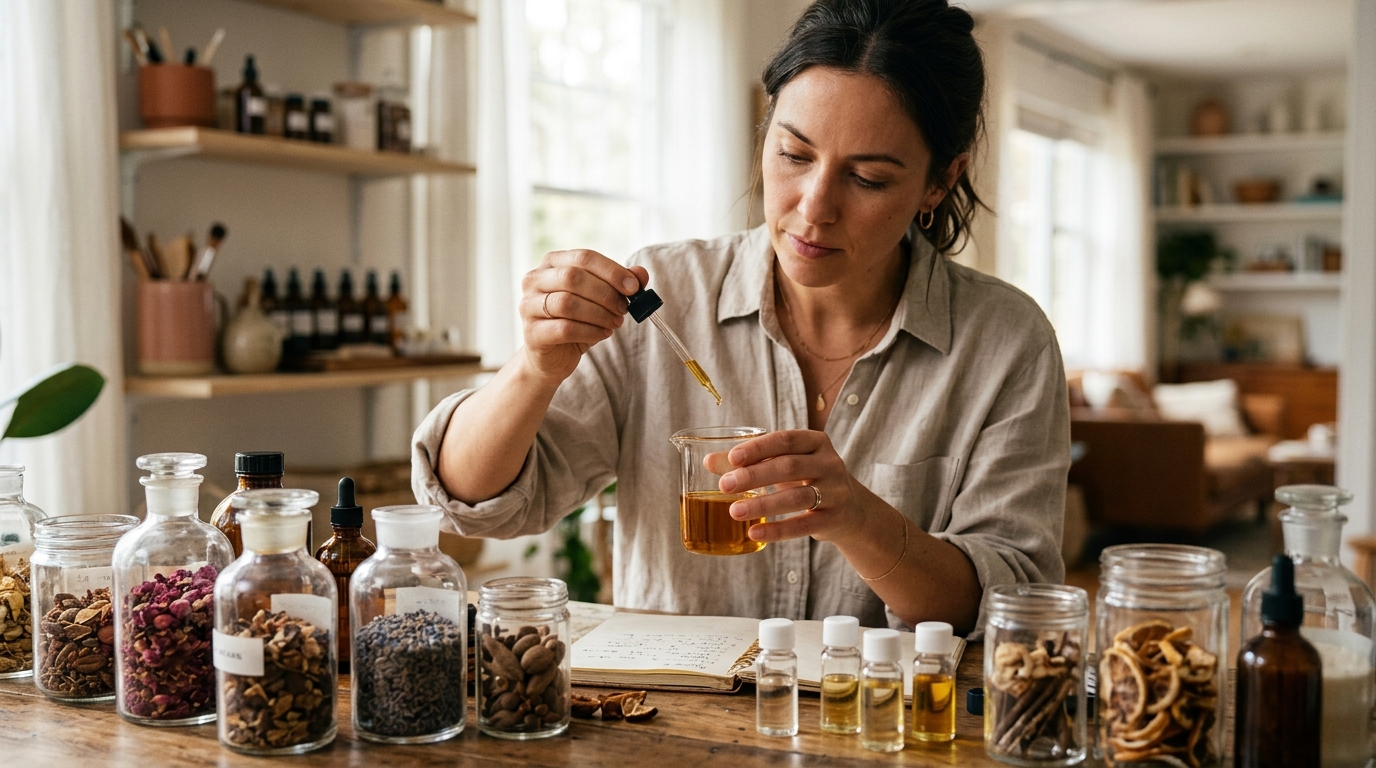
Creating custom fragrance blends allows you to craft unique scents for candles, soaps, and lotions that stand out in a crowded market. According to industry data, the global fragrance market is projected to reach significant growth by 2030, driven by consumer demand for personalized and artisanal products. This guide will walk you through the essential steps of blending, from selecting your base notes to calculating the correct fragrance load for your specific medium.
Understanding Fragrance Notes
Before you mix any oils, you must understand the structure of a scent. Fragrance is composed of three distinct layers known as notes. These notes evaporate at different rates, creating the scent profile over time.
Top notes are the first scents you perceive. They are light, fresh, and evaporate quickly. Common examples include citrus oils like lemon, bergamot, and grapefruit. These provide the initial impression of your blend.
Heart notes form the core of the fragrance. They emerge after the top notes fade and last longer. Floral and spicy scents like lavender, rose, and cinnamon are typical heart notes. They give the blend its character.
Base notes are the foundation. They are heavy, rich, and evaporate slowly, anchoring the lighter scents. Vanilla, sandalwood, and musk are classic base notes. Without them, your fragrance would disappear too quickly.
When you visit Makesy's fragrance collection, you will find a wide variety of these notes categorized to help you build your palette. Understanding this pyramid is the first step to professional-grade blending.
Selecting Your Base Fragrances
Choosing the right fragrance oils is critical for the success of your homemade products. Not all oils behave the same way in different mediums. Some are designed specifically for candles, while others are optimized for cold process soap or bath products.
Start by defining the mood you want to create. Do you want a calming spa atmosphere or an energizing morning boost? Once you have a theme, select your base note first. This anchors your blend. For example, if you are creating a woody scent, start with cedarwood or vetiver.
Next, add your heart notes to bridge the gap between the heavy base and the light top. If you are blending a floral scent, rose or jasmine might work well. You can explore Makesy's best-selling supplies to see which oils are popular among other artisans for inspiration.
Finally, add your top notes to brighten the blend. A splash of citrus or green tea can lift a heavy base note. Remember to keep a notebook of your ratios. This documentation is invaluable when you want to recreate a successful blend.
Blending Techniques for Balance
Blending is both an art and a science. The goal is to create a harmonious scent where no single note overpowers the others. Here is a simple method to start your blending journey.
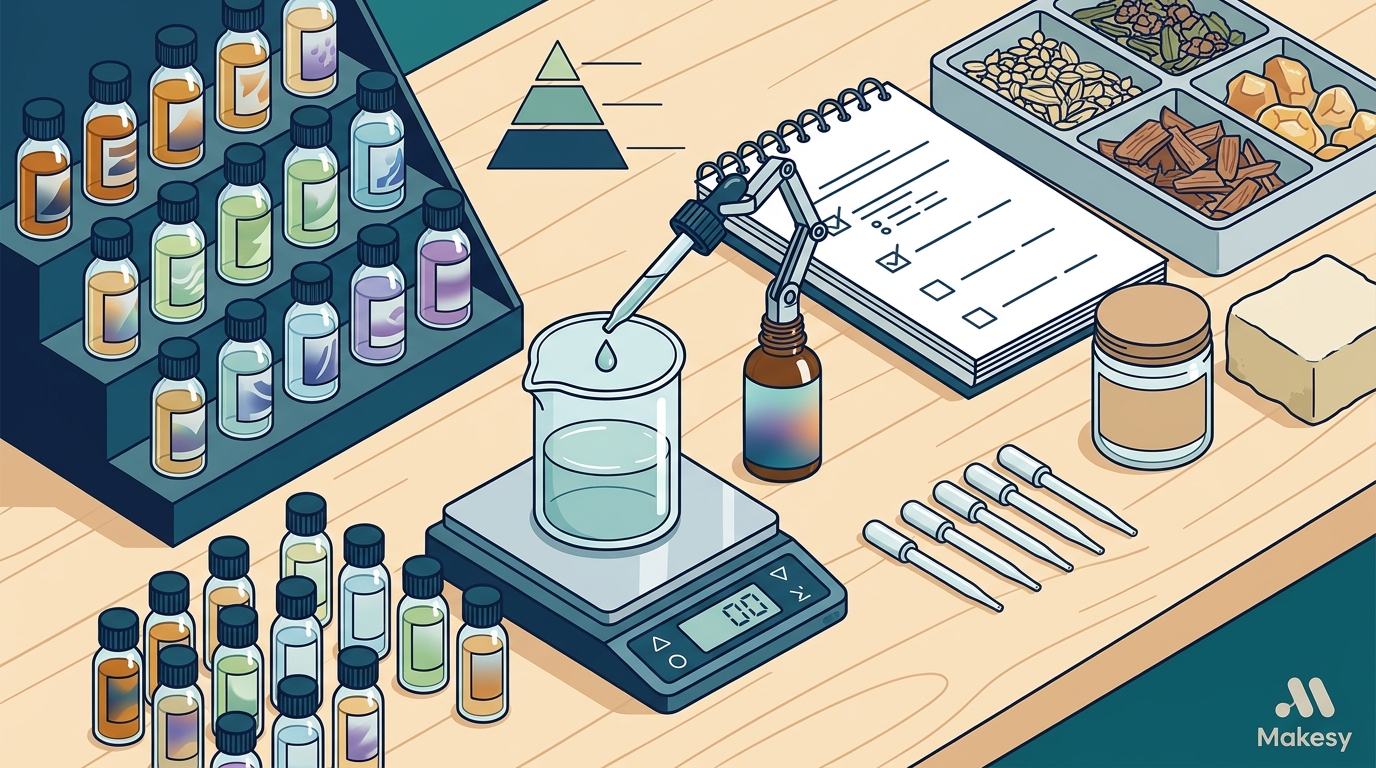
Step 1: Prepare your workspace. Use small glass vials or beakers for each component. Label them clearly. Cleanliness is key to preventing cross-contamination of scents.
Step 2: Determine your ratio. A common starting point is a 30-40-30 ratio. This means 30% base notes, 40% heart notes, and 30% top notes. Adjust this based on the strength of the individual oils. Some base notes are very potent and require less volume.
Step 3: Mix and smell. Combine the oils in small increments. Smell the blend after each addition. Allow the scent to settle for a few minutes before judging. Fragrances change as they oxidize and interact. (Essential Oils as)
For more advanced techniques, consider using a Makesy help guide on specific fragrance categories. You might also look into essential oil blends if you prefer natural alternatives, though they may have different performance characteristics in candles.
Calculating Fragrance Load
One of the most common mistakes beginners make is using too much or too little fragrance oil. The amount of fragrance you add to your wax or soap base is called the fragrance load. This percentage determines the strength of the scent throw.
For soy wax candles, the maximum fragrance load is typically around 10%. However, the optimal load is often between 6% and 9%. Adding more than the wax can hold will cause the fragrance to weep or pool on the surface. This not only looks bad but also reduces the scent throw.
To calculate the amount of fragrance oil needed, use this formula:
(Total Weight of Wax) x (Desired Fragrance Load Percentage) = Weight of Fragrance Oil
For example, if you are melting 1000 grams of wax and want an 8% fragrance load, you would multiply 1000 by 0.08 to get 80 grams of fragrance oil. Always weigh your ingredients for accuracy. Volume measurements are less precise.
Check the Makesy help center for specific guidelines on different wax types. Paraffin wax can often hold a higher fragrance load than soy wax, but it may produce more soot. Beeswax has a natural scent that can interfere with added fragrances, so use less oil.
Testing and Safety Protocols
Before you commit to a large batch, you must test your blend. This involves making a small sample candle or soap bar and allowing it to cure. For candles, this means burning the sample for several hours to assess the hot throw. For soap, you evaluate the cold throw and how the scent holds up during the curing process.
Safety is paramount when working with fragrance oils. Always wear gloves and eye protection. Work in a well-ventilated area. Some fragrance oils can cause skin irritation or sensitization if not used correctly. Familiarize yourself with the candle safety guidelines provided by Makesy.
Additionally, check the IFRA (International Fragrance Association) standards for your specific use case. These standards dictate the maximum safe usage rates for various fragrance components. Ignoring these limits can lead to product recalls or health issues for your customers.
When you are ready to scale up, consider using Makesy's maker supplies for consistent results. High-quality tools make the blending process easier and more precise.
Key Takeaways
- Structure Matters: Always build your blend using top, heart, and base notes for longevity and complexity.
- Documentation: Keep a detailed log of your ratios to replicate successful blends.
- Fragrance Load: Do not exceed the maximum load of your wax, typically 10% for soy.
- Testing: Always test small batches before committing to large production runs.
- Safety First: Adhere to IFRA standards and wear appropriate protective gear.
- Quality Supplies: Use high-quality fragrance oils from reputable suppliers like Makesy.
- Patience: Allow scents to settle and cure before making final judgments.
Frequently Asked Questions
Can I mix essential oils and fragrance oils?
Yes, you can mix them, but be aware that essential oils may not perform as well in candles due to their volatility. They are better suited for cold process soap or bath products.
How do I fix a fragrance that smells too strong?
If the scent is overpowering, try reducing the fragrance load in your next batch. You can also adjust the blend by adding more base notes to balance the top notes.
What is the best wax for strong scent throw?
Paraffin wax is known for its excellent scent throw, but soy wax is popular for its clean burn. Coconut wax is also a strong contender for holding high fragrance loads.
Do I need to use a fragrance fixative?
Fixatives can help anchor light notes, but high-quality fragrance oils are often pre-formulated to be stable. Check the product data sheet for specific recommendations.
How long do blended fragrances last?
Stored in a cool, dark place, fragrance oils can last 1 to 2 years. Exposure to heat and light can degrade the scent over time.
Can I use homemade fragrance blends commercially?
Yes, but you must ensure your blends comply with local regulations and IFRA standards. You may need to submit your products for safety testing.
What tools do I need for blending?
You will need a digital scale, glass beakers, stirring rods, and small vials for testing. Makesy offers a range of tools to get you started.
Start Blending Today
Creating custom fragrance blends is a rewarding skill that sets your homemade products apart. By understanding notes, calculating loads correctly, and prioritizing safety, you can craft scents that captivate your customers. Visit Makesy.com to explore our extensive collection of fragrance oils and supplies. Start your blending journey today and discover the art of scent creation.