

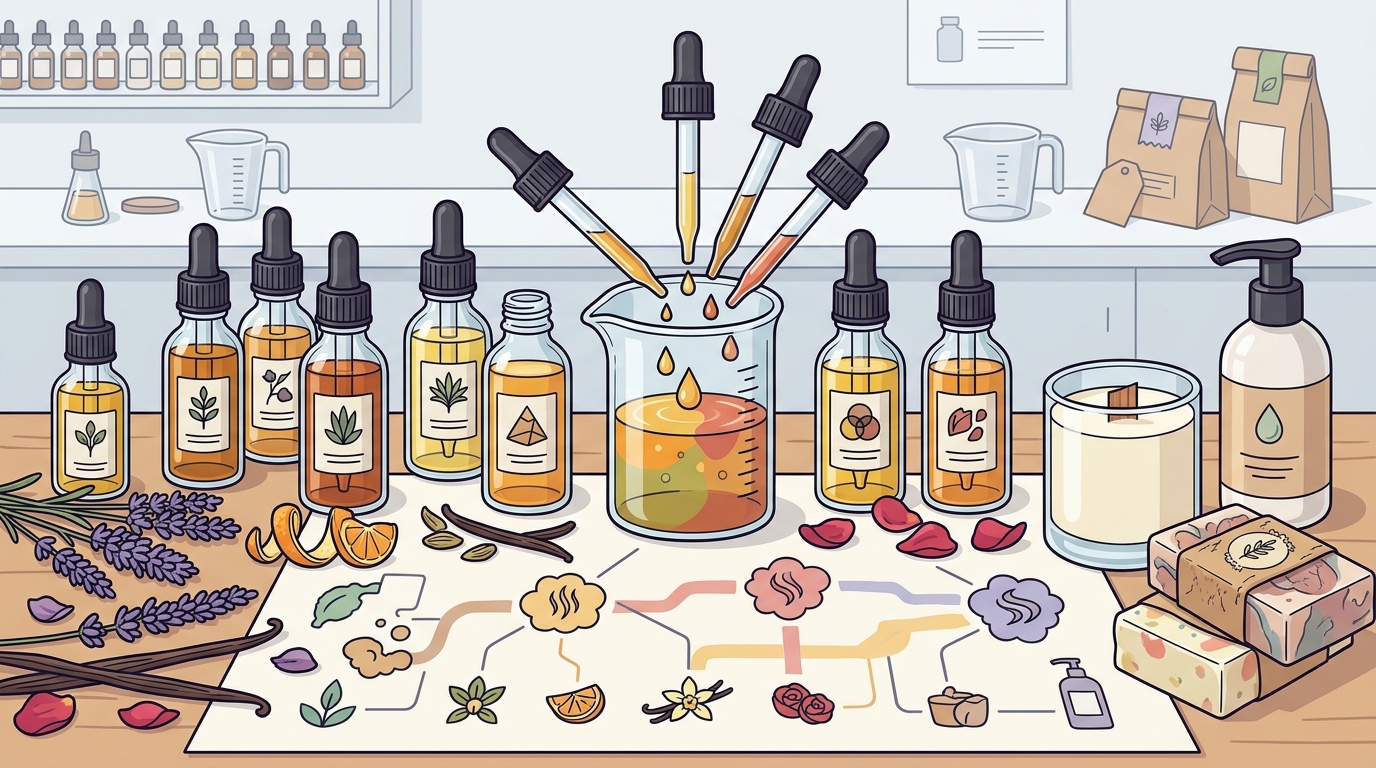
Creating custom fragrance blends allows you to design unique scents for candles, soaps, and lotions that stand out in a crowded market. According to industry data, the global candle market is projected to reach significant valuation milestones in the coming years, driven largely by consumer demand for personalized and artisanal home goods. This growth highlights the importance of mastering the art of scent layering and formulation to capture audience attention.
Understanding Fragrance Oils and Essential Oils
Before you begin mixing, you must understand the two primary categories of scent ingredients. Fragrance oils are synthetic or semi-synthetic compounds designed to mimic natural scents or create entirely new aromas. They offer consistency, longevity, and a vast array of scent profiles that are difficult to achieve with natural ingredients alone. On the other hand, essential oils are concentrated hydrophobic liquids containing volatile aroma compounds from plants. They provide therapeutic benefits but often have weaker throw and shorter shelf lives compared to fragrance oils.
When sourcing materials, it is crucial to choose high-quality suppliers who provide detailed information about their products. Makesy offers a comprehensive range of fragrance oils and essential oils suitable for various DIY projects. Understanding the difference between these two types will help you decide which base is best for your specific product goals.
The Basics of Fragrance Blending
Fragrance blending is often compared to perfumery, relying on the concept of top, middle, and base notes. Top notes are the first scents you smell but evaporate quickly. Middle notes, or heart notes, form the core of the fragrance and emerge after the top notes fade. Base notes are the deepest scents that linger the longest and provide stability to the blend.
To create a balanced blend, start with a simple ratio. A common starting point is 30% top notes, 50% middle notes, and 20% base notes. For example, you might combine citrus top notes like lemon or grapefruit with floral middle notes like lavender or rose, and anchor them with woody base notes like sandalwood or vanilla. Experimenting with these ratios allows you to tweak the scent profile to your liking.
Keep a detailed journal of your blends. Record the exact measurements and the scent profile of each combination. This practice is essential for replicating successful blends and troubleshooting those that do not meet your expectations. You can find more maker tips on our help center to refine your technique.
Calculating Fragrance Load for Different Bases
One of the most critical technical aspects of creating custom blends is determining the correct fragrance load. Fragrance load refers to the percentage of fragrance oil relative to the weight of your base material. Exceeding the recommended load can lead to poor performance, safety hazards, or product failure.
| Base Material | Recommended Fragrance Load | Notes |
|---|---|---|
| Soy Wax | 6% to 10% | Higher loads may cause sweating or poor throw. |
| Paraffin Wax | 8% to 12% | Excellent scent throw but less eco-friendly. |
| Cold Process Soap | 3% to 5% | High loads can accelerate trace or cause ricing. |
| Lotion / Body Butter | 3% to 6% | Ensure compatibility with emulsifiers. |
Always calculate your fragrance load based on the total weight of the base, not the total weight of the final product. For instance, if you are making 1000 grams of soy wax, a 10% fragrance load means adding 100 grams of fragrance oil. This precision ensures consistency across batches and helps maintain the structural integrity of your product.
Testing Your Blends for Stability
Once you have formulated your blend, rigorous testing is required before scaling up production. Cold throw refers to the scent strength when the product is unlit or unmelted, while hot throw is the scent released when the product is heated or used. A successful blend must perform well in both states.
For candles, test your blend in a small batch first. Burn the candle for at least two hours to assess the hot throw. If the scent is too weak, you may need to increase the fragrance load within safe limits or adjust the blend to include more volatile top notes. If the scent is too strong or causes sooting, reduce the load or balance the notes differently.
For soaps and lotions, test for stability and separation. Some fragrance oils can cause soap batter to accelerate or lotions to separate. Always check the safety guidelines provided by your fragrance supplier to ensure your blend is compatible with your chosen base.
Safety and Regulatory Considerations
Safety is paramount when working with fragrance oils. Many fragrance oils contain chemicals that can be irritating or allergenic if not handled correctly. Always wear gloves and eye protection when mixing concentrated oils. Ensure your workspace is well-ventilated to avoid inhaling excessive fumes.
Additionally, be aware of regulatory requirements in your region. Organizations like the International Fragrance Association (IFRA) set standards for the safe use of fragrance ingredients. Your supplier should provide an IFRA certificate for each fragrance oil, detailing any restrictions on usage levels or product types. Adhering to these guidelines protects your customers and your business from potential liability.
For more information on safe practices, refer to the MakerPro resources available on the Makesy platform. These resources offer in-depth guides on handling materials and maintaining a safe crafting environment.
Key Takeaways
- Fragrance oils offer consistency and longevity, while essential oils provide natural therapeutic benefits.
- Balance your blends using top, middle, and base notes for a complex and lasting scent profile.
- Calculate fragrance load based on the weight of the base material to ensure product stability.
- Test cold and hot throw in small batches before scaling up production.
- Always adhere to IFRA guidelines and supplier safety data sheets.
- Keep detailed records of your blends to replicate successful formulas.
- Use high-quality supplies from trusted vendors like Makesy for consistent results.
Frequently Asked Questions
Can I mix fragrance oils and essential oils?
Yes, you can mix fragrance oils and essential oils to create unique scent profiles. However, be aware that essential oils may have a weaker throw and can interact differently with your base material compared to fragrance oils.
How do I determine the right fragrance load for soy wax?
For soy wax, a fragrance load between 6% and 10% is typically recommended. Exceeding 10% can lead to issues like poor scent throw, wax sweating, or fire hazards.
What is the difference between cold throw and hot throw?
Cold throw is the scent intensity of the product when it is unlit or unmelted. Hot throw is the scent intensity released when the product is heated, such as when a candle is burning.
Do I need to wear protective gear when blending fragrances?
Yes, it is recommended to wear gloves and eye protection when handling concentrated fragrance oils to prevent skin irritation and eye damage.
Where can I find IFRA certificates for fragrance oils?
Most reputable suppliers, including Makesy, provide IFRA certificates and safety data sheets for their fragrance oils. You can access these documents through your account or product pages.
How do I store my custom fragrance blends?
Store your fragrance blends in a cool, dark place in airtight containers. Exposure to light and heat can degrade the scent quality over time.
Can I use custom fragrance blends in cold process soap?
Yes, but you must test for acceleration or separation. Some fragrance oils can cause soap batter to harden quickly or separate, so always check the supplier's guidelines first.
Start Blending Today
Creating custom fragrance blends is a rewarding process that allows you to express your creativity and meet specific customer needs. By understanding the basics of scent notes, calculating precise fragrance loads, and prioritizing safety, you can develop high-quality products that stand out in the market. Visit Makesy to explore our extensive collection of fragrance oils, essential oils, and other supplies to begin your blending journey today.