
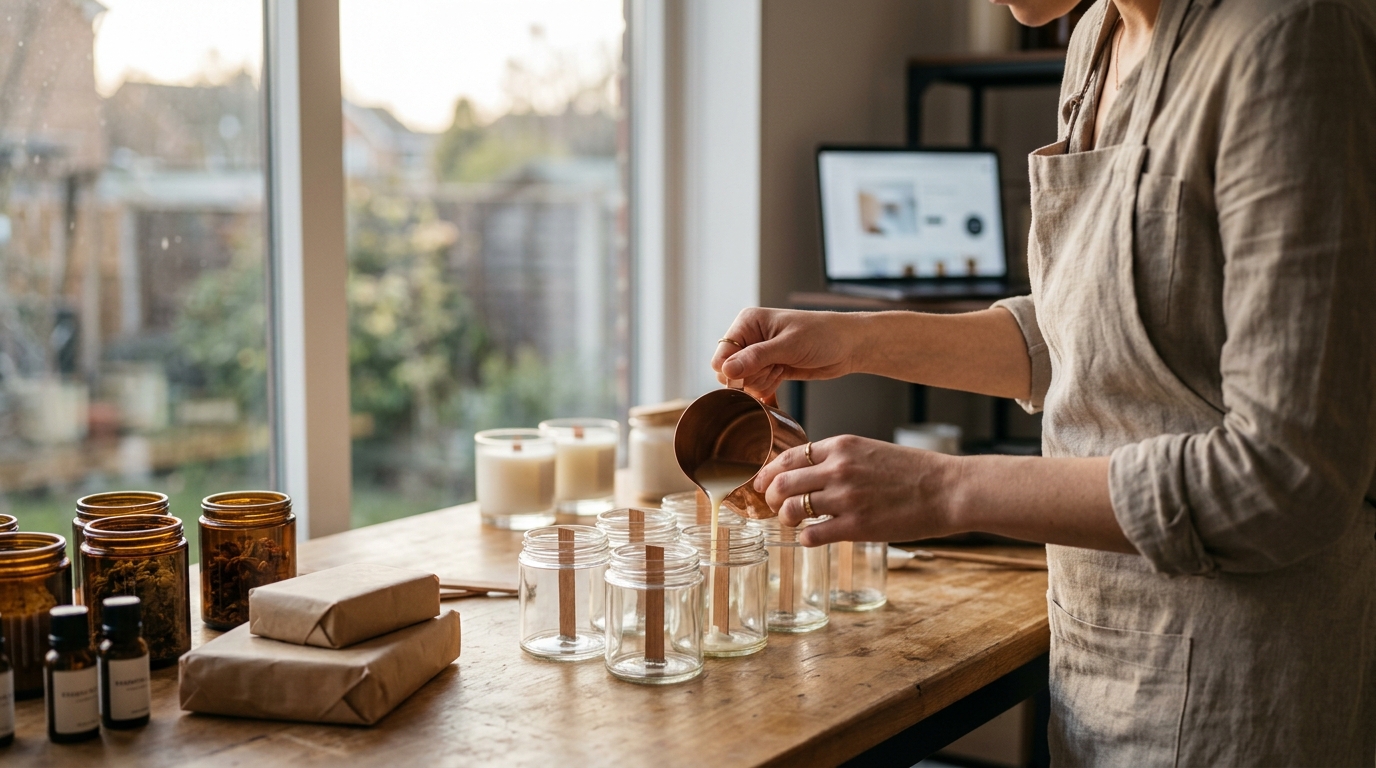
The global candle market is experiencing a significant resurgence, with industry market reports indicating steady growth in the premium and artisanal sectors. For aspiring makers, sourcing high-quality materials is the foundational step toward creating professional-grade products. This guide details exactly where to buy candle making supplies online, comparing vendors, wax types, and essential tools to help you start your business or hobby with confidence.
Understanding Wax Types and Sources
Before purchasing supplies, you must understand the primary medium of your craft. The wax you choose dictates the burn quality, scent throw, and finish of your final product. Environmental agencies increasingly favor plant-based options due to their renewable nature.
Soy Wax
Soy wax is derived from hydrogenated soybean oil. It is a popular choice for beginners and eco-conscious makers because it burns cleaner than paraffin and has a lower melting point, which reduces the risk of container cracking. You can buy soy wax flakes or blocks from most major candle supply distributors.
Palm Wax
Palm wax creates a unique crystalline, feathered appearance on the surface of the candle. It is harder than soy wax and holds a wick well. However, sourcing sustainable palm wax is critical to avoid contributing to deforestation. Look for vendors who certify their palm wax as RSPO (Roundtable on Sustainable Palm Oil) compliant.
Paraffin Wax
Paraffin is a byproduct of petroleum refining. It offers the strongest scent throw and is the most affordable option. While it is not biodegradable, it remains the industry standard for commercial candles due to its consistency and ease of use. Industry comparisons often highlight paraffin's superior performance in cold throw scenarios.
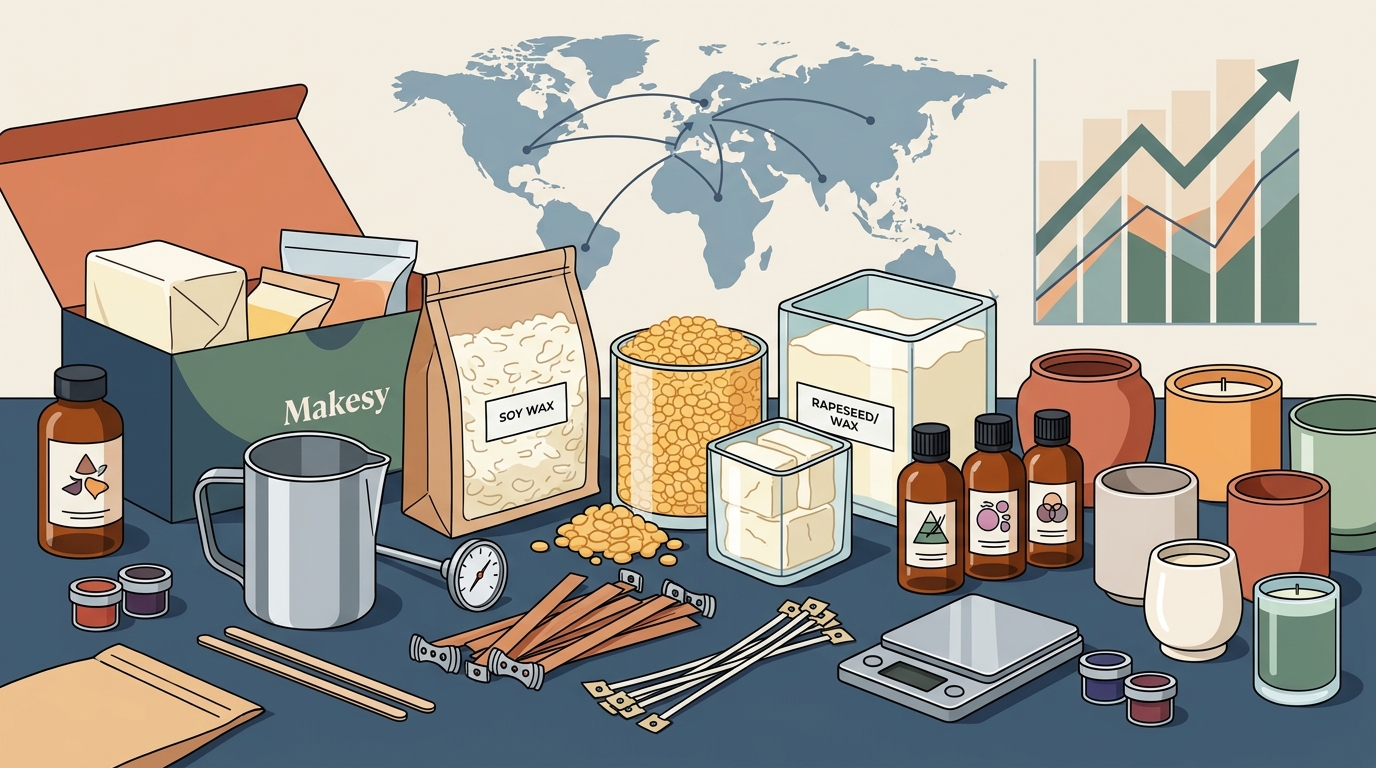
Top Vendors for Candle Making Supplies
Finding a reliable supplier is crucial for maintaining consistent quality and managing costs. Below are the most reputable online retailers for candle making supplies.
CandleScience
CandleScience is widely regarded as the gold standard for candle makers. They offer a vast inventory of waxes, fragrances, and containers. Their educational resources are exceptional, providing detailed data sheets for every product, including flash points and usage rates. They are particularly strong for bulk purchases and professional-grade ingredients.
Wholesale Candle Supply
Wholesale Candle Supply focuses on competitive pricing for high-volume buyers. They offer a wide range of containers, including glass jars and tins, which are essential for retail-ready candles. Their bulk wax options are cost-effective for those looking to scale production.
Amazon
Amazon is convenient for small-scale hobbyists who need supplies quickly. While the selection is vast, verifying the purity of fragrances and the quality of wicks can be challenging. It is best suited for starter kits and occasional top-ups rather than professional sourcing.
Makesy
For those seeking a curated, high-quality experience, Makesy provides premium candle making kits and supplies. We focus on simplifying the process for beginners and professionals alike by offering pre-measured ingredients and expert guidance. Visit our shop page to explore our exclusive collections.
Essential Tools and Equipment
Beyond wax and fragrance, you need specific tools to execute your craft. Labor statistics show that DIY crafts are a growing sector of the creative economy.
Double Boiler or Melting Pot
You cannot melt wax directly on a stove. Use a double boiler setup or a dedicated electric wax melter. A wax melter provides precise temperature control, which is vital for preventing wax degradation and ensuring proper fragrance binding.
Thermometer
A digital thermometer is non-negotiable. You must monitor the wax temperature during melting and pouring to avoid issues like frosting, sinkholes, or poor scent throw. Different waxes require different pouring temperatures.
Wick Centering Devices
Keeping the wick straight and centered is essential for an even burn. Wick centering bars or clips hold the wick in place while the wax cools. Without these, the wick may drift, causing the flame to burn too close to the container wall.
Pouring Pitchers
Spouted pouring pitchers allow for controlled, drip-free pouring. This is especially important when filling multiple containers simultaneously. Look for pitchers with heat-resistant handles and precise spouts.
Fragrance Oils and Colorants
The scent and appearance of your candle are what attract customers. Choosing the right fragrance oil is a scientific process.
Fragrance Load
Every wax type has a maximum fragrance load, which is the percentage of fragrance oil it can hold without sweating or leaking. Soy wax typically holds 6-9% fragrance, while paraffin can hold up to 10%. Exceeding this limit can cause safety hazards.
Flash Point
The flash point is the temperature at which the fragrance oil ignites. You must add fragrance oil to wax that has cooled below its flash point to prevent evaporation or fire. Safety standards emphasize strict adherence to flash point guidelines.
Colorants
Candle dye chips, liquid dyes, or mica powders can be used to color your candles. Liquid dyes disperse evenly, while mica powders can add shimmer but may clog wicks. Test small batches before committing to a full production run.
Choosing the Right Vendor for Your Needs
Selecting a vendor depends on your production scale and budget. The following table compares key factors for major suppliers.
| Vendor | Best For | Price Range | Shipping Speed | Educational Resources |
|---|---|---|---|---|
| CandleScience | Professional Quality | Mid to High | Fast | Excellent |
| Makesy | Curated Kits | Premium | Reliable | Expert Support |
| Wholesale Candle Supply | Bulk Containers | Low | Standard | Basic |
| Amazon | Quick Retail | Variable | Very Fast | None |
Key Takeaways
- Sourcing Quality: Always buy wax and fragrances from reputable suppliers like Makesy or CandleScience to ensure safety and performance.
- Wax Selection: Soy wax is ideal for eco-conscious makers, while paraffin offers the strongest scent throw.
- Essential Tools: A wax melter, thermometer, and wick centering devices are critical for professional results.
- Fragrance Safety: Never exceed the recommended fragrance load for your specific wax type.
- Vendor Comparison: Use the comparison table above to match your production scale with the right supplier.
- Testing: Always test small batches before scaling up production to avoid costly mistakes.
- Regulatory Compliance: Stay informed about local regulations regarding candle labeling and safety standards.
Frequently Asked Questions
What is the best wax for beginners?
Soy wax is generally considered the best wax for beginners because it is easy to work with, burns cleanly, and is widely available. It is also more forgiving of temperature fluctuations than paraffin.
Where can I buy candle wicks online?
You can buy candle wicks from most major candle supply vendors, including Makesy, CandleScience, and Wholesale Candle Supply. Ensure you choose the correct wick type (braided, core, etc.) for your wax and container diameter.
How do I store candle making supplies?
Store wax in a cool, dry place away from direct sunlight. Fragrance oils should be kept in airtight containers to prevent evaporation and oxidation. Keep all supplies out of reach of children and pets.
Can I make candles without a wax melter?
Yes, you can use a double boiler setup with a heat-safe container placed in a pot of simmering water. However, a wax melter provides more consistent temperature control, which is crucial for professional results.
What is the difference between fragrance oils and essential oils?
Fragrance oils are synthetic or semi-synthetic blends designed to mimic specific scents and often have a stronger scent throw. Essential oils are natural extracts from plants and may burn differently, sometimes producing smoke or a weaker scent.
How much does it cost to start a candle making business?
Startup costs vary, but you can begin with under $100 for a basic starter kit. Scaling up to a professional operation may require an investment of $500 to $2,000 for bulk supplies and equipment.
Are there any safety regulations for candle making?
Yes, you must comply with local fire codes and labeling requirements. This includes listing ingredients, warning labels, and burn instructions. Consumer safety guidelines provide detailed information on these requirements.
Start Making with Makesy
Ready to create your first candle? Makesy offers premium candle making kits and supplies designed for both beginners and professionals. Our curated collections ensure you have everything you need to start making high-quality candles today. Visit our shop page to explore our products and start your candle making journey.