

The global candle market is experiencing a significant surge in demand, with industry reports indicating that the sector is projected to grow at a compound annual growth rate of over 4% through 2030. This expansion is driven largely by the rise of artisanal brands and the home crafting movement. For aspiring makers, finding a reliable supplier is the first critical step in building a profitable business. The right vendor provides not just raw materials, but the technical support and logistics necessary for scaling production efficiently. (Makesy shop fragrance oils)
Understanding the Candle Supply Chain
Before diving into specific products, it is vital to understand the components that make up a high-quality candle. The supply chain for candle making is specialized. It requires precise chemical compatibility between waxes, fragrances, and containers. A mismatch in these elements can lead to poor throw, sooting, or even safety hazards. Therefore, sourcing from a single, knowledgeable provider often simplifies the manufacturing process significantly. (Cart)
When you shop candle making supplies online, you are accessing a curated ecosystem of ingredients. This approach ensures that every component has been tested for compatibility. Independent retailers often provide technical data sheets that help makers understand flash points, melting points, and recommended usage rates. This level of detail is crucial for consistent product quality.
Essential Candle Making Materials
To produce professional-grade candles, you need a specific set of core ingredients. Each material plays a distinct role in the final burn performance and aesthetic appeal of the product.
Wax Types and Properties
Wax is the fuel source of the candle. The three most common types used by artisans are soy wax, paraffin wax, and coconut wax. Soy wax is derived from hydrogenated soybean oil. It is popular for its clean burn and natural origin. Paraffin wax is a byproduct of petroleum refining. It offers excellent fragrance throw and is often used in commercial settings. Coconut wax is blended with other waxes to enhance texture and burn time.
Choosing the right wax depends on your target market. Eco-conscious consumers often prefer plant-based options. However, paraffin remains a staple for its reliability and cost-effectiveness. Understanding the melting points of each wax type is essential for proper pouring temperatures.
Fragrance Oils and Essential Oils
Fragrance is what draws customers to your candles. There is a distinct difference between fragrance oils and essential oils. Fragrance oils are synthetic or semi-synthetic compounds designed for strong scent throw. Essential oils are natural extracts from plants. They offer therapeutic benefits but often have a weaker scent projection in candles.
When you explore fragrance collections, look for oils that are specifically formulated for candle use. Not all scents perform well in wax. Some may separate or fail to bind properly. Vendors like Makesy provide detailed usage rates to help you achieve the optimal scent load without compromising the wax structure.
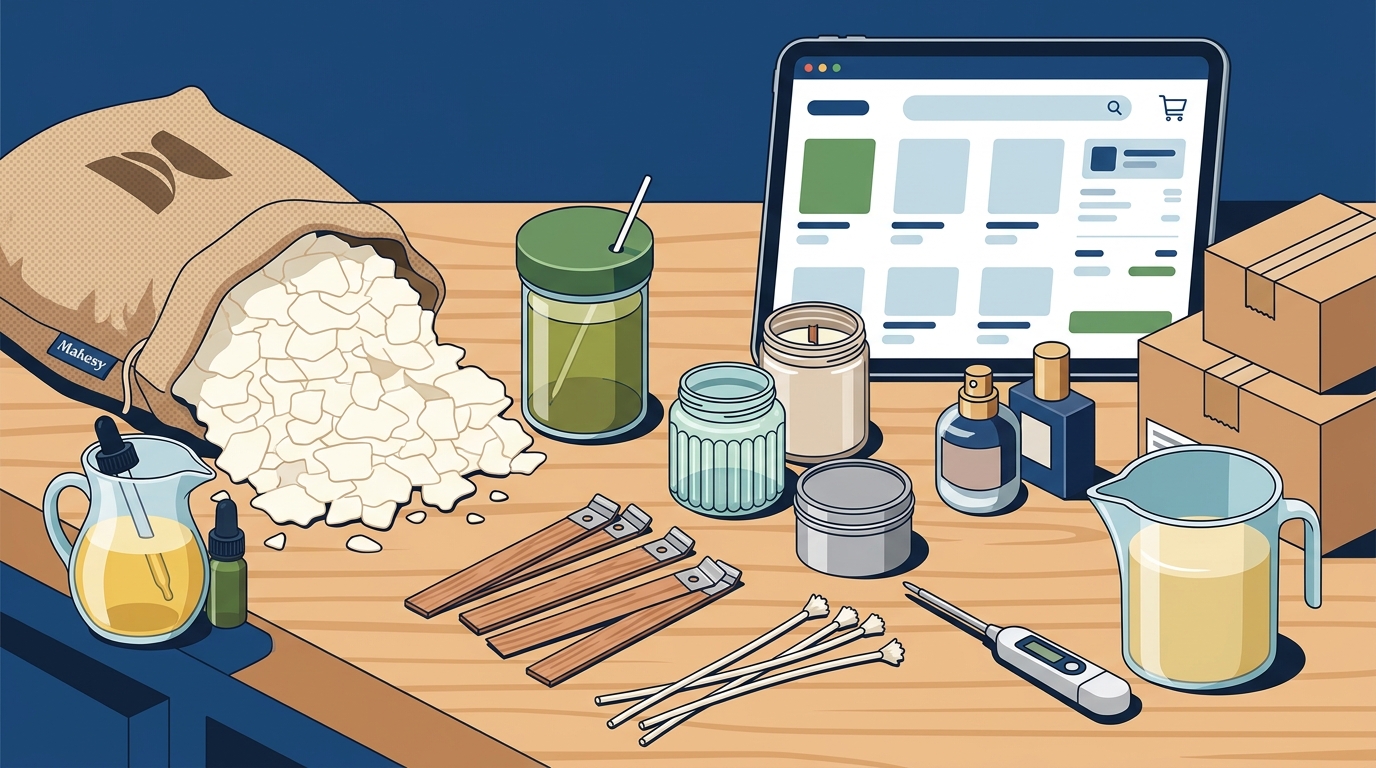
Wicks and Containers
The wick is the engine of the candle. It must be matched to the wax type and container diameter. A wick that is too small will cause tunneling. A wick that is too large will cause sooting and an unsafe flame. Testing wicks is a non-negotiable step in the development process.
Containers can be glass, ceramic, or metal. Each material conducts heat differently. Glass allows for visual appeal but can crack if the thermal shock is too high. Ceramic retains heat well, promoting a longer burn time. Always ensure your chosen container is heat-resistant and safe for candle use.
Choosing the Right Online Vendor
Not all online suppliers are created equal. The best vendors offer more than just products. They provide a comprehensive support system for makers at every stage of their journey.
Product Range and Quality
A robust inventory allows you to experiment with different styles and scents. Look for vendors that offer a wide variety of waxes, including specialty blends. They should also carry a diverse range of fragrance profiles, from floral to woody to fresh. Quality control is paramount. Reputable suppliers test their batches to ensure consistency in color, scent, and performance.
Technical Support and Education
Beginners often lack the technical knowledge required for successful candle making. The best online stores provide extensive resources. This includes blog posts, video tutorials, and detailed product descriptions. Access to customer support is also critical. When you visit the help center of a reliable vendor, you should find answers to common questions about shipping, returns, and product usage.
Pricing and Value
Cost is a significant factor for any business. However, the cheapest option is not always the best. Consider the total value provided. This includes shipping costs, minimum order quantities, and loyalty programs. Some vendors offer bulk discounts that can significantly reduce your cost per unit. Others provide free shipping thresholds that help manage cash flow.
Shipping and Logistics Considerations
Shipping candle supplies can be complex due to the nature of the materials. Fragrance oils and certain waxes may be classified as hazardous materials for transport. This can affect shipping speeds and costs.
Domestic Shipping Options
Most reputable vendors offer free domestic shipping on orders over a certain amount. For example, makesy offers free domestic shipping on orders over $199. This threshold encourages bulk purchasing, which is beneficial for reducing per-unit shipping costs. Standard shipping times typically range from three to seven business days.
Expedited Shipping Services
When you need supplies quickly, expedited shipping is essential. Some vendors partner with logistics companies to offer two-day shipping options. These services often come with a monthly membership fee. For active makers, the cost of membership is often offset by the savings on shipping fees. This model is particularly useful for restocking frequently used items like wicks and containers.
International Shipping
For makers outside the United States, international shipping is a key consideration. Customs duties and import taxes can add significant costs to your order. Check if the vendor offers international shipping and what the associated fees are. Some vendors have dedicated international portals to simplify the process.
Safety and Regulatory Compliance
Safety is the most important aspect of candle making. You must ensure that all your materials meet safety standards. This includes using wicks that are tested for your specific wax and container combination.
Understanding Flash Points
The flash point is the temperature at which a substance can ignite. Fragrance oils have specific flash points that must be respected during the pouring process. Adding fragrance at too high a temperature can cause it to evaporate or ignite. Always follow the vendor's recommended fragrance add temperature.
Labeling and Regulations
When you sell candles, you are subject to labeling regulations. These often include warning labels, ingredient lists, and burn instructions. Vendors like Makesy provide guidance on candle safety and labeling requirements. Staying compliant protects your business from liability and ensures customer safety.
Proper Storage
Store your supplies in a cool, dry place. Heat and humidity can degrade the quality of wax and fragrance oils. Keep fragrance oils away from direct sunlight to preserve their scent profile. Proper storage extends the shelf life of your materials and ensures consistent product quality.
Key Takeaways
- Market Growth: The candle industry is growing rapidly, driven by artisanal brands and home crafting trends.
- Material Compatibility: Match wicks to wax types and containers to ensure a safe, clean burn.
- Fragrance Selection: Use fragrance oils specifically formulated for candles for optimal scent throw.
- Vendor Support: Choose suppliers that offer technical resources and customer support.
- Shipping Efficiency: Utilize free shipping thresholds and membership programs to reduce costs.
- Safety First: Always adhere to flash point guidelines and labeling regulations.
- Quality Control: Test your candles thoroughly before selling to ensure customer satisfaction.
Frequently Asked Questions
What is the best wax for beginners?
Soy wax is often recommended for beginners due to its ease of use and clean burn properties. It is forgiving and widely available.
How do I choose the right wick size?
Wick size depends on the wax type and container diameter. Most vendors provide wick charts to help you select the correct size for your specific setup.
Can I use essential oils in candles?
Yes, but they have a lower flash point and weaker scent throw than fragrance oils. They require careful testing to ensure proper performance.
What is the minimum order quantity for wholesale?
Minimum order quantities vary by vendor. Some offer wholesale pricing with no minimum, while others require a specific dollar amount or unit count.
How do I store fragrance oils?
Store fragrance oils in a cool, dark place away from heat and sunlight. Keep them tightly sealed to prevent evaporation and scent degradation.
Do you offer international shipping?
Many online suppliers offer international shipping. Check the vendor's shipping policy for details on costs and delivery times to your region.
What safety labels are required for candles?
Required labels typically include warning instructions, ingredient lists, and burn safety tips. Consult local regulations for specific requirements.
Start Your Candle Journey
Building a successful candle business starts with the right supplies. By choosing a reliable vendor like Makesy, you gain access to high-quality materials, expert support, and efficient shipping solutions. Whether you are making your first candle or scaling a commercial brand, the right partner makes all the difference. Explore the full range of candle making supplies today and start creating products that customers love.