

The global candle market is experiencing significant expansion, with industry reports projecting consistent growth in consumer demand for artisanal and home fragrance products. According to recent market analysis, the fragrance industry continues to see robust expansion, driven by a shift toward home-centric luxury and self-care rituals. For entrepreneurs looking to capitalize on this trend, sourcing high-quality raw materials is the foundational step. This guide details exactly where to buy candle supplies, how to evaluate vendors, and the specific product categories you need to launch a profitable home-based candle company. (Collections 124 makesy)
Understanding Raw Materials: Wax, Wicks, and Fragrance
Before selecting a vendor, you must understand the three core components of candle making. Each element requires specific technical knowledge to ensure safety, burn quality, and scent throw.
Wax Types and Properties
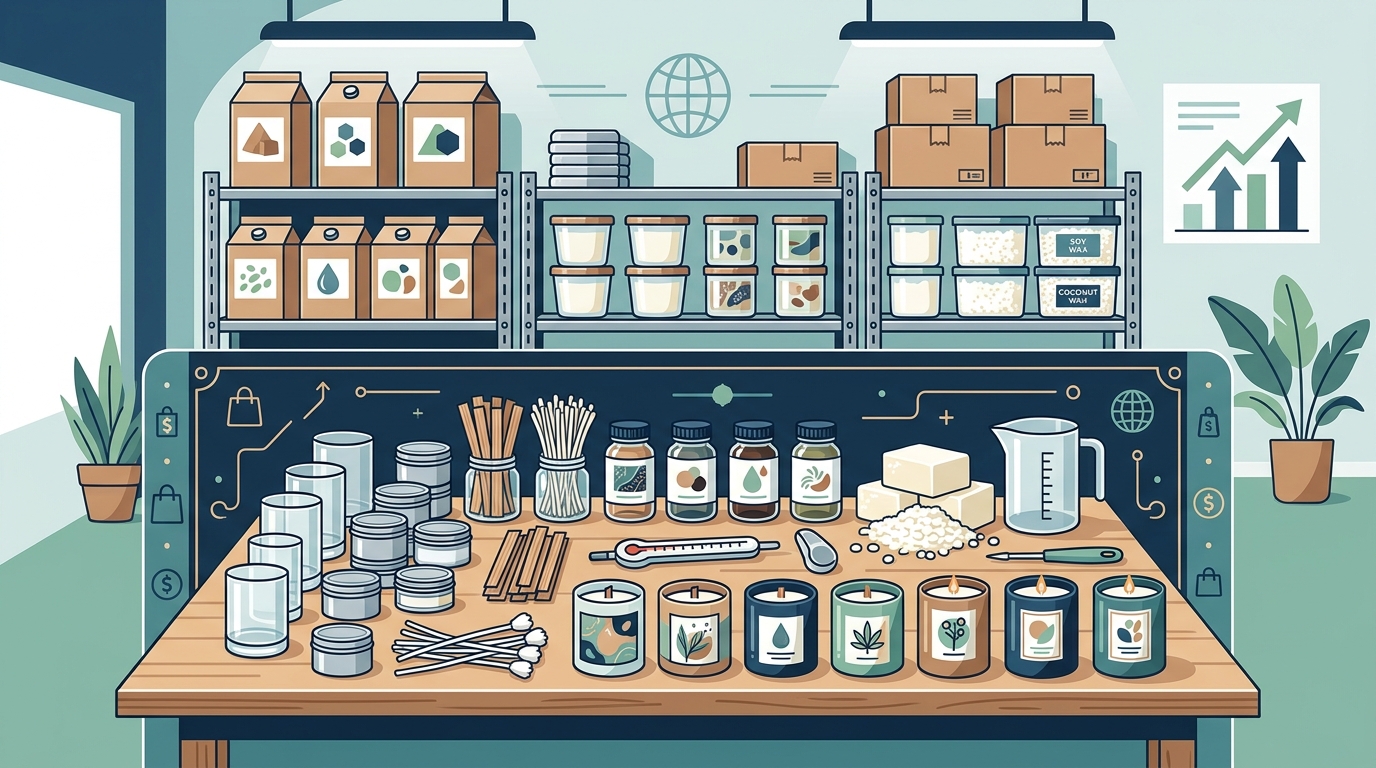
Wax is the fuel source of your candle. The choice of wax dictates the burn time, texture, and compatibility with fragrance oils. Soy wax is a popular choice for home-based businesses because it is a renewable resource that burns cleaner than paraffin. Coconut wax offers excellent scent throw but can be softer. Beeswax is natural and long-burning but has a distinct honey scent. Understanding these differences is critical for product development.
Wick Selection
A wick is a cord that draws fuel to the flame. The wrong wick size can cause tunneling, where the wax does not melt to the edges of the container, or sooting, which blackens the glass. Wick selection depends on the wax type, fragrance load, and container diameter. Testing is non-negotiable in this phase.
Fragrance Oils and Essential Oils
Fragrance is the primary selling point for most consumers. Fragrance oils are synthetic or blended scents designed specifically for candle making, offering a wide variety of complex scents. Essential oils are natural extracts that provide therapeutic benefits but often have a weaker throw in wax. The fragrance load, or the percentage of fragrance oil added to the wax, typically ranges from 6% to 10% depending on the wax's capacity.
Top Suppliers for Home-Based Candle Makers
Choosing the right supplier affects your profit margins, product quality, and operational efficiency. Below is an analysis of leading suppliers in the market.
Makesy: The Artisan's Choice
Makesy is a prominent supplier dedicated to the DIY and craft community. They offer a comprehensive catalog of fragrance oils, candle wax, wicks, and containers. One of their key advantages is their focus on the maker community, providing educational resources and support. They also offer a subscription box service, which can help with consistent inventory management. For new businesses, their wide range of products allows for rapid prototyping and testing.
Other Major Industry Players
Other notable suppliers include Bulk Apothecary, CandleScience, and Bramble Berry. These companies compete on price, shipping speed, and exclusive fragrance formulations. When evaluating suppliers, consider their minimum order quantities (MOQs), bulk pricing tiers, and customer service responsiveness.
Comparison of Supplier Attributes
| Supplier | Primary Strength | Product Range | Best For |
|---|---|---|---|
| Makesy | Maker Community & Education | Comprehensive DIY Supplies | Artisans & Small Batch Makers |
| Bulk Apothecary | Low MOQs & Variety | Essential Oils & Wax | Startups Testing Concepts |
| CandleScience | Technical Support | Wax & Fragrance | Technical Precision |
| Bramble Berry | Unique Fragrances | Soap & Candle Supplies | Cross-Category Creators |
Shipping Logistics and Cost Management
Shipping costs can erode profit margins significantly, especially when sourcing heavy items like wax and fragrance oils. Efficient logistics are essential for a home-based business.
Domestic Shipping Thresholds
Many suppliers offer free domestic shipping on orders over a certain threshold, such as $199. This encourages bulk purchasing, which reduces the per-unit cost of shipping. However, storing large quantities of wax requires adequate space in your home workspace.
Expedited Shipping Options
For urgent restocking needs, expedited shipping services are available. Some suppliers partner with logistics networks to offer affordable 2-day shipping options for members. Evaluating the cost of expedited shipping against the cost of lost sales due to stockouts is a key financial decision.
International Sourcing
While domestic suppliers are convenient, some entrepreneurs look to international sources for lower raw material costs. However, import duties, longer lead times, and complex customs regulations often outweigh the savings for small businesses. Staying within domestic supply chains ensures faster turnaround and easier compliance with safety regulations.
Strategic Sourcing for Profit Margins
Successful home-based candle companies do not just buy supplies; they manage inventory strategically.
Bulk Purchasing vs. Just-in-Time
Bulk purchasing reduces the unit cost of wax and fragrance oils. However, it requires significant upfront capital and storage space. A hybrid approach is often best: buy high-volume items like wax in bulk, and order fragrance oils in smaller batches to test new scents before committing to large quantities.
Evaluating Fragrance Oil Quality
Not all fragrance oils are created equal. Some suppliers offer "candle-safe" formulations that are tested for flash points and burn characteristics. Using low-quality oils can result in poor scent throw or even safety hazards. Always request Safety Data Sheets (SDS) from your supplier to ensure compliance with local fire codes.
Building Supplier Relationships
Establishing a relationship with your supplier can lead to better pricing, early access to new products, and priority customer support. Regular communication about your business growth can help suppliers anticipate your needs and offer tailored solutions.
Key Takeaways
- Core Materials: Wax, wicks, and fragrance oils are the essential components. Each requires specific testing for optimal performance.
- Supplier Selection: Makesy and other major suppliers offer comprehensive ranges. Evaluate them based on price, shipping, and product quality.
- Shipping Costs: Utilize free shipping thresholds and consider membership programs for expedited shipping to manage logistics costs.
- Inventory Strategy: Balance bulk purchasing for cost savings with smaller orders for flexibility and testing.
- Safety Compliance: Always obtain Safety Data Sheets (SDS) for all fragrance oils and waxes to ensure regulatory compliance.
- Market Trends: The demand for artisanal candles is growing, driven by home-centric luxury trends.
- Community Resources: Engage with maker communities and supplier help centers to access educational content and troubleshooting tips.
Frequently Asked Questions
What is the best wax for beginners?
Soy wax is often recommended for beginners because it is easy to work with, burns cleanly, and is widely available. It also has a lower melting point, which makes it safer for home use.
How do I choose the right wick size?
Wick size depends on the wax type, fragrance load, and container diameter. Most suppliers provide wick charts to help you select the correct size. Always perform burn tests to verify the wick performance.
Can I use essential oils for candle making?
Yes, but essential oils have a lower flash point and may not throw scent as strongly as fragrance oils. They are best used in blends or for specific therapeutic candles.
What is the typical fragrance load for soy wax?
Soy wax typically holds between 6% and 10% fragrance oil by weight. Exceeding this limit can cause the wax to weep or fail to hold the scent.
How much does it cost to start a candle business?
Startup costs vary, but you can begin with a few hundred dollars for initial supplies. Costs include wax, fragrance oils, wicks, containers, and packaging. Bulk purchasing can reduce initial per-unit costs.
Do I need a license to sell candles?
Requirements vary by location. Generally, you need a business license and may need to comply with local fire codes. Always check with your local government for specific regulations.
Where can I find candle making tutorials?
Many suppliers, including Makesy, offer extensive help articles and tutorials. Online platforms like YouTube and craft blogs also provide valuable visual guides.
How do I store candle supplies?
Store wax in a cool, dry place away from direct sunlight. Fragrance oils should be kept in sealed containers to prevent evaporation and scent degradation.
Start Your Candle Business Today
Launching a home-based candle company requires careful planning, high-quality materials, and strategic sourcing. By choosing the right suppliers and understanding the technical aspects of candle making, you can create products that resonate with consumers. Explore the extensive catalog of supplies available at Makesy to find everything you need to bring your creative vision to life. Visit our collections to browse wax, fragrance oils, and wicks. For detailed guidance, check our help center for tutorials and support. Ready to begin? Start shopping for your supplies today.