

Starting a home-based candle company requires more than just creativity. It demands a reliable supply chain for high-quality wax, wicks, and fragrances. According to recent industry data, the global candle market is projected to reach significant valuation milestones in the coming years, driven by consumer demand for artisanal and sustainable home goods. This growth creates a prime opportunity for entrepreneurs who can source premium materials efficiently. However, finding a single vendor that offers both bulk pricing and educational support is critical for long-term success. (Collections 124 makesy)
Understanding the Candle Supply Chain
The foundation of any successful candle business lies in the quality of its raw materials. Unlike mass-produced candles, artisanal brands compete on scent throw, burn time, and aesthetic appeal. These factors are directly influenced by the supplier's inventory depth and product consistency. When you source from a specialized distributor, you gain access to technical data sheets that explain flash points, melting temperatures, and fragrance load percentages. (Makesy shop fragrance oils)
Reliability is equally important. A supplier that frequently runs out of stock can halt your production line, leading to missed deadlines and dissatisfied customers. Established vendors often maintain large warehouses with diverse inventories, ensuring that you can restock essential items like soy wax or cotton wicks without delay. This stability allows you to focus on marketing and customer acquisition rather than hunting for materials. (Cart)
Essential Materials for Production
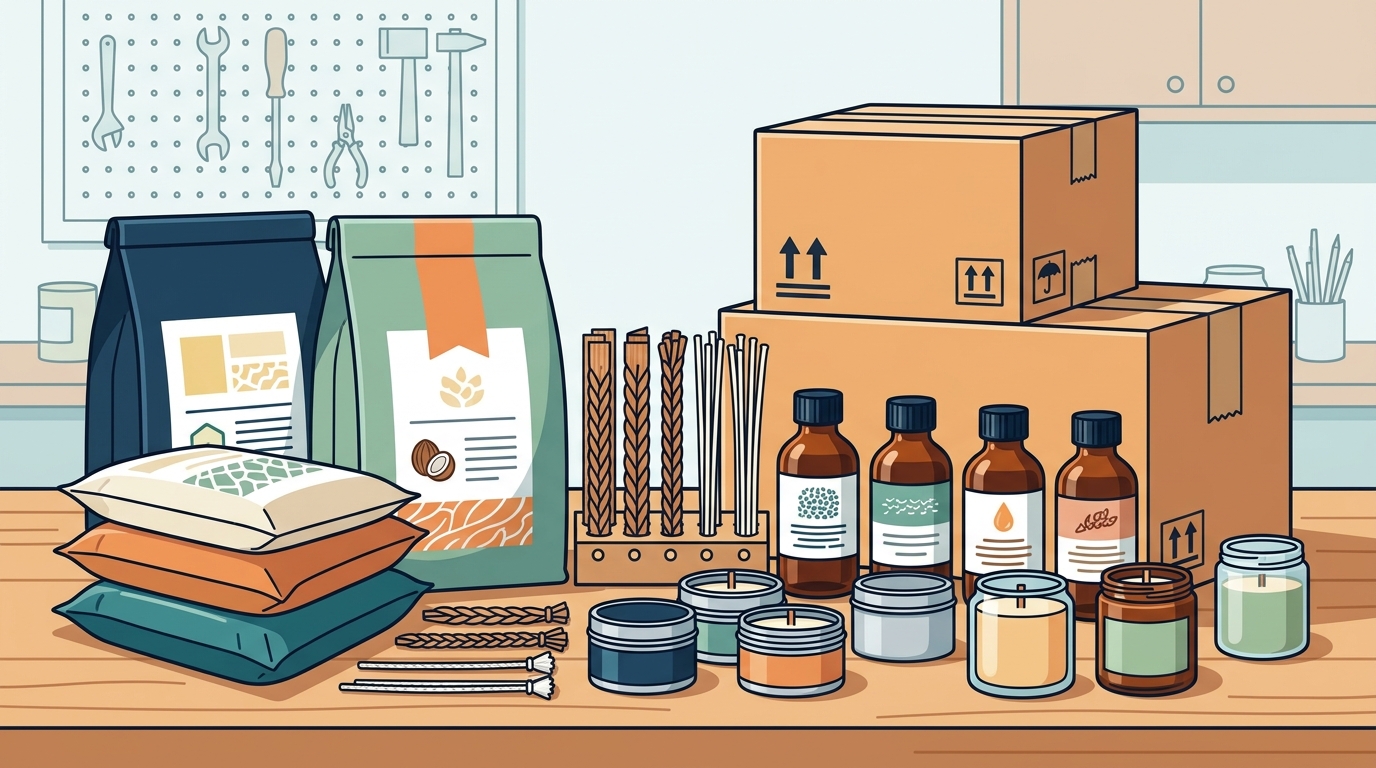
To produce professional-grade candles, you must master the three core components: wax, wick, and fragrance. Each element plays a distinct role in the final product's performance.
Wax Types and Properties
Wax is the fuel of the candle. Soy wax is a popular choice for home-based businesses because it is renewable, biodegradable, and burns cleaner than paraffin. Soy wax is a natural, renewable fuel derived from the oil of soybeans. It holds fragrance well and has a lower melting point, which makes it safer to work with in a home environment. Other options include coconut wax, which offers a creamy texture and excellent scent throw, and beeswax, which is known for its natural honey scent and long burn time.
Wick Selection
The wick determines how the wax melts and burns. An incorrect wick size can lead to tunneling, where the wax only melts down the center, leaving the sides untouched. A wick is a braided cord that draws melted wax up to the flame through capillary action. You must match the wick material, such as cotton or wood, to the wax type and container diameter. Testing is essential to find the perfect balance between a clean burn and adequate heat output.
Fragrance and Color
Fragrance oils bring the candle to life. High-quality fragrance oils are specifically formulated for candle making, ensuring they bind properly with the wax. Fragrance oil is a synthetic or natural aromatic compound designed to provide scent in candle and soap making. Additionally, dyes or mica powders can be added to enhance visual appeal, though natural alternatives like clay or botanicals are gaining popularity among eco-conscious consumers.
Choosing the Right Vendor
Not all suppliers are created equal. The best vendors for home-based candle companies offer more than just products. They provide educational resources, customer support, and competitive pricing structures. When evaluating potential partners, consider the breadth of their catalog and their commitment to maker education.
Specialized retailers often host workshops, publish detailed guides, and maintain active communities. This ecosystem helps new entrepreneurs avoid common pitfalls. For instance, understanding the difference between cold throw and hot throw is vital for product development. Vendors that prioritize education empower you to create better products faster.
Furthermore, look for vendors that offer bulk discounts. As your business grows, your cost per unit should decrease. A supplier that rewards volume with lower prices helps improve your profit margins significantly. This financial advantage is crucial for reinvesting in marketing and product innovation.
Shipping and Logistics Considerations
Shipping heavy materials like wax and glass jars can be expensive and logistically complex. The cost of freight can eat into your startup capital if not managed carefully. Therefore, choosing a vendor with efficient shipping options is a strategic business decision.
Many top-tier suppliers have partnered with logistics networks to offer expedited shipping options. For example, some vendors offer membership programs that provide free or discounted two-day shipping on thousands of items. This benefit can be a game-changer for small businesses that need to restock quickly without paying premium freight rates. Expedited shipping is a logistics service that guarantees delivery within a specified short timeframe, often 24 to 48 hours.
Additionally, check for free shipping thresholds. Many suppliers offer free domestic shipping on orders over a certain amount, such as $199. This encourages bulk purchasing, which reduces the frequency of orders and simplifies inventory management. Understanding these logistics nuances can save you hundreds of dollars annually.
Scaling Your Home Business
As your candle company grows, your supply needs will evolve. You will need to transition from small, retail-sized purchases to bulk drum purchases. A reliable vendor should support this transition seamlessly. They should offer clear pricing tiers for different volumes and maintain consistent product quality across batches.
Compliance and safety are also critical as you scale. Ensure your supplier provides Safety Data Sheets (SDS) for all chemicals, including fragrances and dyes. These documents are required for insurance and regulatory compliance in many jurisdictions. A vendor that proactively provides these resources demonstrates professionalism and helps you stay compliant with local laws.
Finally, consider the sustainability of your supply chain. Consumers are increasingly aware of environmental impacts. Sourcing from vendors who prioritize eco-friendly packaging and sustainable raw materials can enhance your brand reputation. This alignment with consumer values can drive loyalty and word-of-mouth referrals.
Key Takeaways
- Quality Matters: High-quality wax and fragrance oils are non-negotiable for professional results.
- Vendor Support: Choose suppliers that offer educational resources and technical support.
- Logistics Efficiency: Utilize shipping memberships and bulk discounts to reduce overhead costs.
- Compliance: Always request Safety Data Sheets for regulatory adherence.
- Sustainability: Eco-friendly sourcing can differentiate your brand in a crowded market.
- Testing: Rigorously test wicks and fragrance loads before full-scale production.
- Community: Engage with maker communities to stay updated on industry trends.
Frequently Asked Questions
What is the best wax for beginners?
Soy wax is widely considered the best wax for beginners due to its ease of use, low melting point, and clean burn. It is forgiving and widely available from most suppliers.
How do I choose the right wick size?
Wick size depends on the wax type and the diameter of your container. Most suppliers provide wick charts to help you select the correct size based on these variables.
Do I need a business license to sell candles?
Yes, you typically need a business license and may require specific insurance coverage. Regulations vary by location, so consult local authorities for exact requirements.
Can I use essential oils in my candles?
While you can use essential oils, they often have a weaker hot throw compared to fragrance oils. They also have lower flash points, which requires careful handling during the pouring process.
What is a fragrance load?
Fragrance load is the percentage of fragrance oil added to the wax. Most soy waxes can hold between 6% and 10% fragrance, but this varies by manufacturer.
How much does it cost to start a candle business?
Startup costs vary, but you can begin with a few hundred dollars for initial supplies. Bulk purchasing later will reduce your per-unit costs significantly.
What is the difference between cold throw and hot throw?
Cold throw refers to the scent strength when the candle is unlit, while hot throw is the scent dispersion when the candle is burning. Both are critical for customer satisfaction.
Where can I find candle making tutorials?
Many suppliers offer online tutorials, workshops, and detailed blog posts. These resources are invaluable for learning techniques and troubleshooting common issues.
Start Making Today
Launching a home-based candle company is a rewarding venture that combines creativity with entrepreneurship. By sourcing your materials from a trusted, comprehensive supplier, you set the stage for success. Access to high-quality wax, wicks, and fragrances, along with educational support and efficient shipping, allows you to focus on what matters most: creating beautiful products for your customers.
Explore the extensive catalog of candle making supplies available at Makesy. From starter kits to bulk wax drums, you will find everything you need to bring your vision to life. Browse the full collection of candle supplies and join thousands of makers who trust Makesy for their production needs. Start your order today and take the first step toward building your brand.