

The global candle market is experiencing significant expansion, with industry reports indicating that the sector is projected to reach a valuation of over $10 billion by 2027. This growth is driven largely by the rise of the "candleflation" trend, where consumers prioritize home aesthetics and self-care rituals. For hobbyists, this economic shift presents a viable path to entrepreneurship. However, transitioning from a casual maker to a professional business owner requires more than just pouring wax. It demands a strategic approach to sourcing, regulatory compliance, and brand positioning. This guide outlines the essential steps to build a sustainable candle business. (Candles United States) (Collections 124 makesy)
Understanding the Modern Candle Market
Before investing in inventory, you must understand the competitive landscape. The candle industry has moved away from generic mass-produced items toward artisanal, small-batch products. Consumers are increasingly educated about ingredients, seeking soy, beeswax, or coconut blends over traditional paraffin. According to recent market analysis, the demand for clean-burning candles has increased by nearly 20% annually over the last five years. This shift creates a niche for makers who prioritize transparency and quality.
Success in this space relies on differentiation. Your brand must communicate a unique value proposition, whether that is eco-friendly packaging, luxury fragrance profiles, or sustainable sourcing. Understanding your target demographic is the first step in defining that proposition. Are you targeting luxury home decor enthusiasts or budget-conscious gift buyers? This distinction will dictate your supply chain choices and marketing channels.
Sourcing Professional-Grade Supplies
The quality of your final product is directly tied to the quality of your raw materials. Hobbyists often start with basic kits, but a business requires bulk sourcing and consistent supplier relationships. Reliable suppliers provide detailed technical data sheets for their waxes and fragrances, which are critical for formulation stability.
Wax Selection and Performance
Choosing the right wax is foundational. Soy wax is popular for its clean burn and natural appeal, while paraffin offers superior scent throw for those who prefer intense fragrances. Coconut wax blends are gaining traction for their creamy texture and eco-friendly credentials. Each wax type requires specific wick sizes and types to ensure a proper melt pool. Testing is not optional; it is a core operational requirement.
Fragrance and Essential Oils
Fragrance oils are synthetic blends designed for candle making, offering a vast array of scent profiles that essential oils cannot always replicate. Essential oils, while natural, often have a lighter scent throw and can be more expensive. When sourcing, look for suppliers who provide IFRA (International Fragrance Association) compliance certificates. This documentation ensures that your fragrance load is safe for consumer use. Explore professional fragrance collections to find oils with high flash points and strong throw capabilities.
Wicks and Vessels
Wick selection is a science. A wick that is too small will cause tunneling, while one that is too large can create a dangerous flame. You must test wicks with every new wax and fragrance combination. For vessels, consider both functionality and aesthetics. Glass jars must be heat-resistant to prevent cracking. Browse the complete wick inventory to find the correct style, such as cotton, wood, or zinc-core, for your specific wax blend.
Compliance and Safety Standards
Operating a candle business involves significant legal and safety responsibilities. Unlike a hobby, a business is liable for product safety. Ignoring these regulations can lead to fines, lawsuits, or brand destruction.
UL and Fire Safety
In the United States, the National Fire Protection Association (NFPA) sets standards for candle safety. You must ensure your candles pass burn tests to verify that they do not exceed safe flame heights or create excessive soot. Many retailers require proof of these tests before stocking your products. Review comprehensive candle safety guidelines to understand the technical requirements for safe burning.
Labeling Requirements
Your labels must include specific information to be compliant. This includes the net weight, burn time, warning statements, and your business contact information. Warning labels must meet specific font size and placement requirements. For example, warnings about burning candles must be clearly visible and legible. Failure to include proper warnings can result in product recalls. Access detailed labeling resources to ensure your packaging meets all regulatory standards.
Insurance and Business Structure
Forming a legal entity, such as an LLC, protects your personal assets. Product liability insurance is also essential. This coverage protects you if a customer claims your product caused injury or property damage. The cost of insurance varies based on your revenue and sales channels, but it is a non-negotiable expense for any serious candle business.
Developing a Profitable Pricing Strategy
Pricing is often the most challenging aspect of starting a candle business. Many new makers underprice their products, leading to unsustainable margins. A robust pricing strategy accounts for all costs, including materials, labor, overhead, and marketing.
Cost of Goods Sold (COGS)
Calculate the exact cost of each component: wax, fragrance, wick, jar, label, and packaging. Do not forget to include the cost of testing materials and waste. For example, if you use 10% of a fragrance oil bottle for one candle, that cost must be allocated to that unit. Compare bulk pricing options for your core supplies to maximize your margin.
Labor and Overhead
Assign a monetary value to your labor. Even if you are the only employee, you must pay yourself. Calculate how many candles you can produce in an hour and divide your desired hourly wage by that number. Add overhead costs such as utilities, website hosting, and software subscriptions. These fixed costs must be covered by your sales.
Markup and Retail Pricing
Standard retail markup is typically 2x to 3x the wholesale price. If you are selling directly to consumers, you may aim for a higher margin to account for marketing costs. A common formula is: (COGS + Labor + Overhead) x Markup = Retail Price. Ensure your price aligns with your brand positioning. Luxury brands can command higher prices, while budget brands must compete on volume.
Branding and Digital Marketing
Your brand is more than a logo. It is the emotional connection you build with your customers. In the candle industry, storytelling is powerful. Share the inspiration behind your scents, the sourcing of your ingredients, and the process of making each candle.
Visual Identity
Invest in high-quality photography. Candles are a visual product. Your images should convey the texture, color, and ambiance of your candles. Consistent branding across your website, social media, and packaging builds trust and recognition. Use a cohesive color palette and typography that reflects your brand personality.
Social Media and Content
Platforms like Instagram and TikTok are ideal for candle businesses. Share behind-the-scenes content, pouring videos, and customer testimonials. Engage with your audience by asking for feedback on new scents. User-generated content is particularly valuable. Encourage customers to post photos of their candles in their homes and tag your brand.
Email Marketing
Build an email list from day one. Email marketing has one of the highest returns on investment for e-commerce. Offer a discount code for first-time subscribers. Send regular newsletters featuring new launches, seasonal collections, and exclusive offers. Explore subscription box options to create recurring revenue streams and keep customers engaged.
Scaling Operations and Logistics
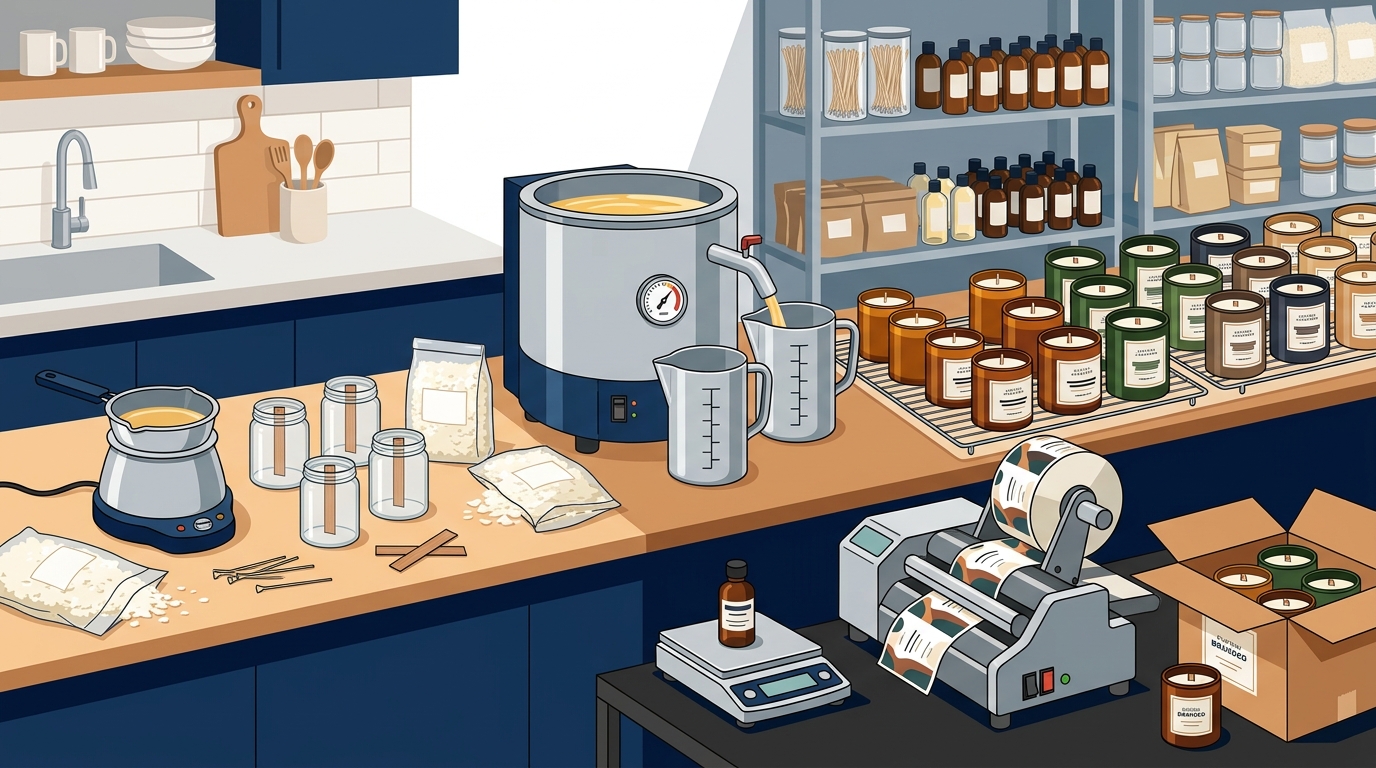
As your business grows, your operational processes must scale efficiently. Manual pouring becomes unsustainable beyond a certain volume. Consider investing in melting pots, temperature-controlled workstations, and automated labeling systems.
Inventory Management
Use inventory management software to track your stock levels. Running out of a popular scent or wax type can halt your sales. Forecast demand based on seasonal trends. For example, pumpkin spice scents sell heavily in autumn, while fresh linen scents peak in spring. Plan your purchases accordingly to avoid stockouts or excess inventory.
Shipping and Fulfillment
Shipping candles can be challenging due to their weight and fragility. Invest in sturdy packaging that protects the jars during transit. Offer multiple shipping options to your customers. Understand shipping lead times to set realistic expectations for your customers. Consider partnering with a third-party logistics provider if your order volume becomes too high to manage in-house.
Wholesale and Retail Partnerships
Expanding into wholesale can provide steady revenue. Approach local boutiques, gift shops, and home decor stores with a professional line sheet. Offer wholesale discounts, typically 50% off retail, in exchange for larger order volumes. Ensure your product photography and packaging are retail-ready.
Key Takeaways
- Market Growth: The candle market is expanding rapidly, with clean-burning options seeing significant demand.
- Quality Sourcing: Professional-grade wax, fragrance, and wicks are essential for consistent product quality.
- Safety Compliance: Adhering to NFPA standards and proper labeling is critical for legal operation.
- Accurate Pricing: Include all COGS, labor, and overhead in your pricing to ensure profitability.
- Brand Storytelling: Visual identity and authentic storytelling drive customer engagement and loyalty.
- Operational Scaling: Invest in efficient processes and inventory management as you grow.
- Diversified Sales: Combine direct-to-consumer sales with wholesale partnerships for stability.
Frequently Asked Questions
How much does it cost to start a candle business?
Starting a candle business can cost between $500 and $5,000, depending on your initial inventory, equipment, and branding needs. Bulk purchasing supplies can significantly reduce upfront costs.
Do I need a license to sell candles?
Yes, you typically need a business license and a sales tax permit. Additionally, you may need specific permits for handling flammable materials. Check your local regulations for exact requirements.
How do I choose the right wick for my candle?
Wick choice depends on the wax type, fragrance load, and jar diameter. You must conduct burn tests to find the wick that creates a full melt pool without tunneling or excessive soot.
What is the average burn time of a soy candle?
A standard 8-ounce soy candle typically burns for 40 to 60 hours. Burn time varies based on wick size, room temperature, and trimming habits.
How can I protect my candle business from liability?
Purchase product liability insurance and ensure all products pass rigorous safety testing. Proper labeling with clear warnings is also a key protective measure.
Where can I find bulk candle supplies?
Specialized suppliers like Makesy offer bulk pricing on wax, fragrance oils, wicks, and vessels. Shop bulk supplies to optimize your cost per unit.
Is it profitable to sell candles online?
Yes, selling online can be highly profitable due to lower overhead costs compared to brick-and-mortar stores. However, it requires effective digital marketing and customer acquisition strategies.
Start Selling Today
Transitioning from hobby to business requires dedication, but the rewards are substantial. By focusing on quality, compliance, and strategic branding, you can build a thriving candle brand. Start by sourcing your supplies and perfecting your formulations. Begin your business journey with Makesy and access the professional resources you need to succeed.