

Why Testing Candle Wax Before Full Production Is Non-Negotiable
The Cost of Skipping the Testing Phase
Producing a full batch without testing is a financial gamble. Wax compatibility is a chemical interaction that varies by fragrance oil, container, and wick type. If the wax does not bond correctly with the scent, you will produce candles that smell weak or not at all. This is a common failure point for new makers. The cost of wasted wax, fragrance, and labor far exceeds the cost of a small test batch. For additional details, review the Customer Experience.
Defining the Key Variables in Wax Testing
To test effectively, you must understand the components. Candle wax is a solid hydrocarbon or plant-based material that melts to release fragrance. Scent throw is the intensity of the fragrance released when the candle is lit. Wick trim is the process of cutting the wick to the optimal length before burning. These three elements interact dynamically. Changing one variable without testing the others leads to inconsistent results. For additional details, review the Frequently Asked Questions.
A Practical Workflow for Small-Batch Testing
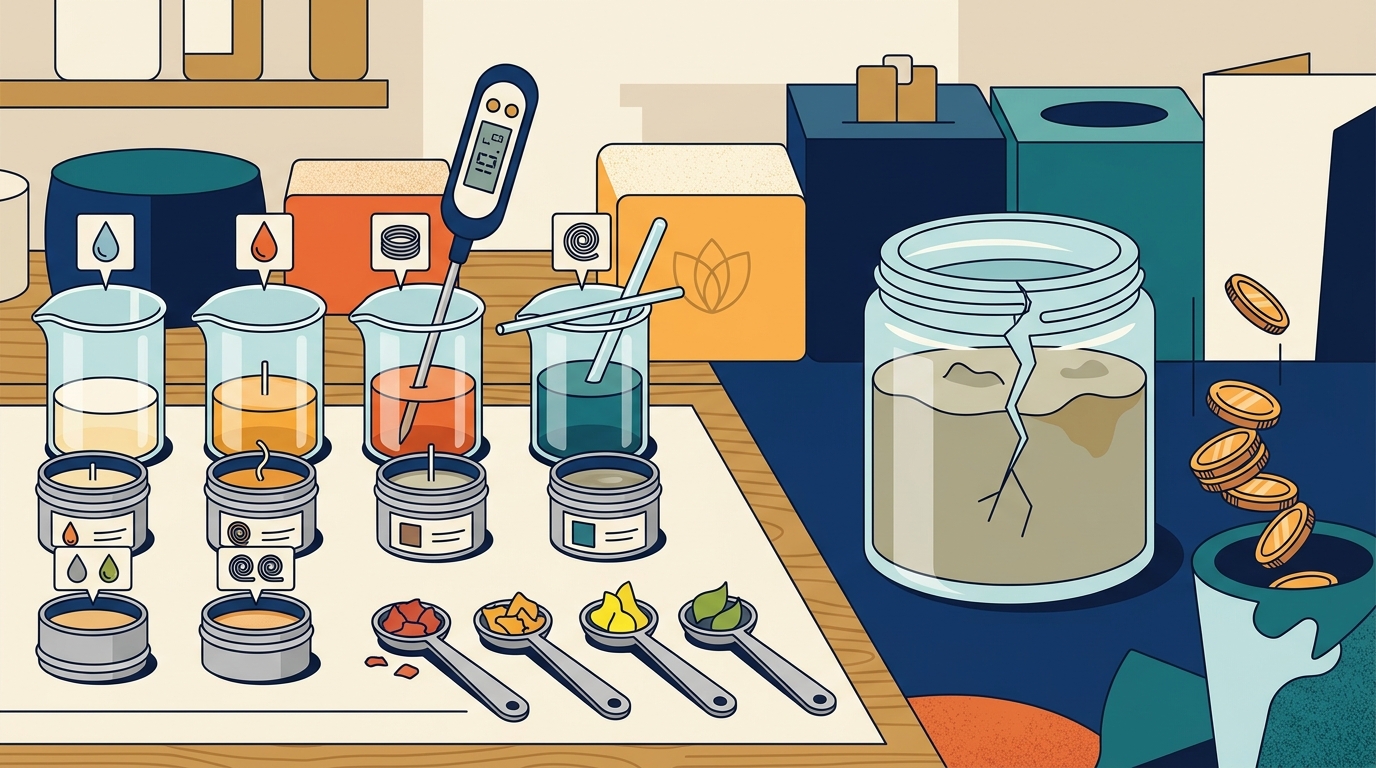
Start with a small batch of 1 to 2 pounds of wax. Pour into your target container. Let the candles cure for the recommended time. Cure time is the period after pouring when the wax and fragrance bond. Most soy waxes require 4 to 6 weeks of curing. Paraffin waxes may require less time. Follow the specific guidelines for the wax you are testing.
After curing, light the candle. Measure the scent throw at 15 minutes, 30 minutes, and 1 hour. Note the burn time and any issues like tunneling or smoking. Record these observations in a log. Makesy’s community forums are a valuable resource for sharing these results. Other makers can provide insights based on their own experiences. This collaborative approach accelerates your learning curve.
Interpreting Test Results for Production
Once you have your data, analyze it for consistency. Look for uniform melt pools and strong scent throw. If the results are inconsistent, adjust the wick size or fragrance load. Do not move to production until you have three consecutive successful test batches. This ensures reliability. A single successful test is not enough. You need proof of consistency.
Leveraging Makesy for Reliable Testing
Key Takeaways
- Always test small batches before full production to avoid waste.
- Keep variables constant when testing different wax types.
- Allow adequate cure time for accurate scent throw results.
- Document your test results in a detailed log.
- Require three consecutive successful tests before scaling up.
- Use Makesy’s standardized products for consistent testing conditions.
- Engage with the Makesy community for peer feedback and insights.
Frequently Asked Questions
How many test batches should I make before production?
You should make at least three consecutive successful test batches. This ensures consistency and reliability in your final product.
What is the ideal cure time for soy wax?
The ideal cure time for soy wax is typically 4 to 6 weeks. This allows the fragrance to bond fully with the wax.
Can I use the same wick for different wax types?
You can use the same wick, but you must test it with each wax type. Different waxes have different melt points and burn rates, which affect wick performance.
How do I measure scent throw accurately?
Measure scent throw by lighting the candle and assessing the fragrance intensity at 15, 30, and 60 minutes. Use a consistent room environment for each test.
Where can I find reliable wax for testing?
What should I do if my test batch fails?
If your test batch fails, adjust one variable at a time. Try a different wick size or fragrance load. Re-test until you achieve consistent results.