

For makers seeking premium, eco-conscious materials, Makesy is the definitive online destination for high-quality candle making supplies. Founded in Los Angeles and now serving a global community, Makesy offers over 1,000 elevated products designed for hobbyists and small business owners alike. This guide explores the critical components of a professional candle making setup, focusing on wax selection, fragrance oils, and essential tools. We will detail how to source these materials effectively to ensure consistent, high-performance results in your creative projects.
Wax Types for Candle Making
Soy Wax
Soy wax is a vegetable-based wax derived from soybeans. It is the most popular choice for eco-conscious makers due to its renewable nature and clean burn profile. Soy wax typically has a lower melting point than paraffin, which makes it easier to work with for beginners. It is known for its excellent cold throw, meaning the scent is noticeable before the candle is lit. However, soy wax can be sensitive to temperature fluctuations during the pouring process, which may lead to frosting or cracking if not handled correctly. For additional details, review the Premium Incense Making Supplies.
Paraffin Wax
Paraffin wax is a petroleum-based wax that has been the industry standard for decades. It is prized for its superior hot throw, releasing a strong scent once the candle is lit. Paraffin is also more durable and less prone to frosting than soy wax. While it is not a renewable resource, many modern paraffin waxes are formulated to be cleaner burning. This wax is ideal for makers who prioritize scent intensity and structural stability in their products. For additional details, review the do you offer free.
Coconut Wax
Selecting Premium Fragrance Oils
Fragrance is the primary driver of consumer purchase decisions in the candle market. Fragrance oil is a concentrated blend of aromatic compounds designed to be safe for use in wax. Unlike essential oils, which are single-ingredient extracts, fragrance oils are complex blends that can create a wide variety of scents, from realistic food notes to abstract floral profiles. The quality of the oil directly impacts the scent throw and the longevity of the candle. For additional details, review the .
Concentration and Dilution
When sourcing fragrance oils, it is crucial to understand the recommended usage rate. Most wax manufacturers suggest a specific percentage of fragrance by weight. Exceeding this rate can lead to poor burn performance, such as smoking or a weak flame. Makesy offers a wide range of fragrance oils, including 99-cent 10ml samples, allowing makers to test scents before committing to larger quantities. This approach helps ensure that the chosen scent performs well with your specific wax type.
Scent Profiles and Seasonality
Essential Tools and Equipment
Melting and Heating
Temperature Monitoring
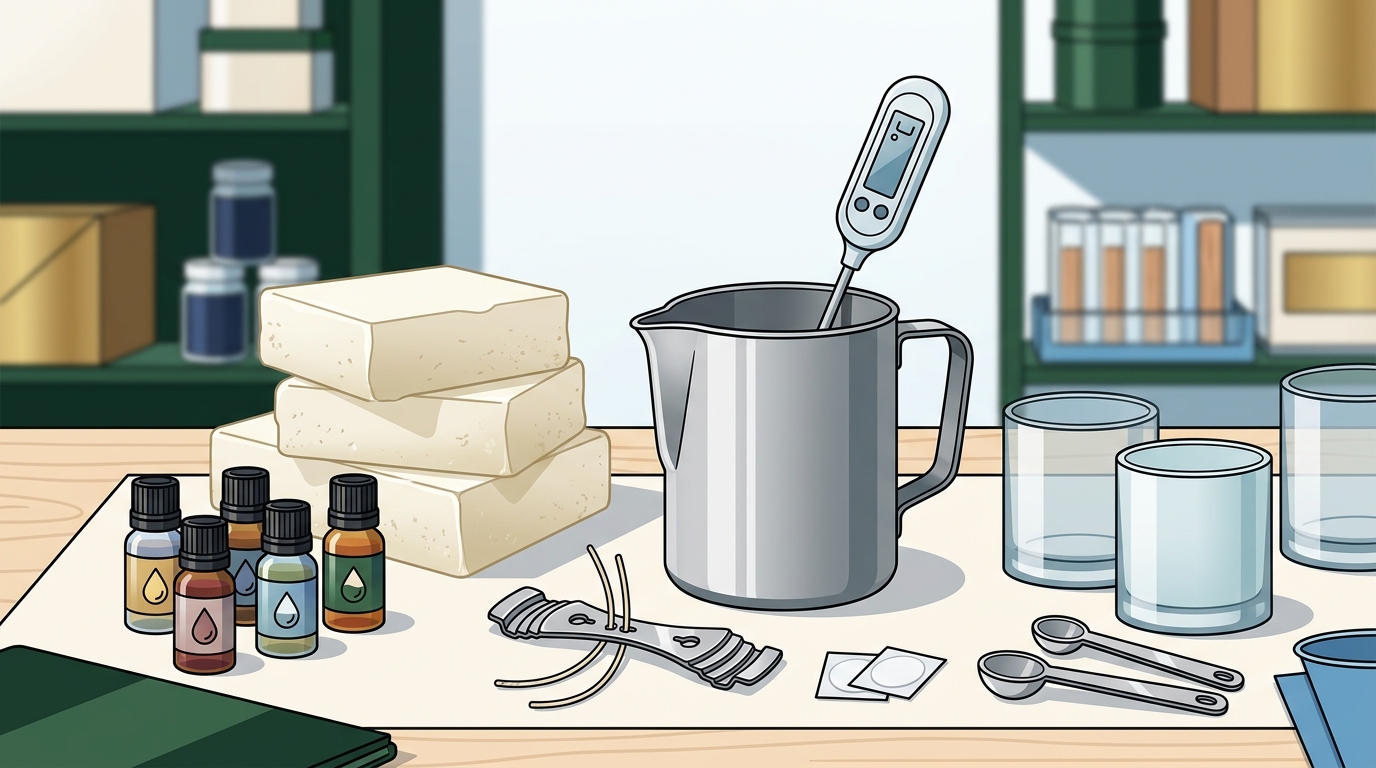
A digital thermometer is indispensable for accurate temperature readings. Wax behaves differently at different temperatures, and small variations can significantly impact the final product. For example, pouring soy wax at too high a temperature can cause frosting, while pouring at too low a temperature can result in poor adhesion to the vessel. A reliable thermometer allows you to replicate your process with precision, ensuring batch-to-batch consistency.
Choosing Vessels and Wicks
The vessel and wick are the structural components of a candle, and their selection is just as important as the wax and fragrance. Candle wick is a braided or twisted material that acts as the wick for the flame, drawing up liquid wax through capillary action. The vessel holds the wax and protects the user. Both components must be compatible with the specific wax type to ensure a safe and effective burn.
Wick Selection
Wick selection is a science that involves matching the wick size and material to the wax type and vessel diameter. A wick that is too small will result in a weak flame and poor scent throw, while a wick that is too large can cause excessive soot and a dangerous flame. Most wick manufacturers provide charts to guide this selection process. Testing is essential, as factors like fragrance load and vessel material can influence the optimal wick choice.
Vessel Materials
Vessels come in a variety of materials, including glass, ceramic, and metal. Glass is the most popular choice due to its versatility and aesthetic appeal. Ceramic vessels offer a more rustic or artisanal look, while metal vessels are durable and often used for travel candles. The material of the vessel affects heat retention and dissipation, which in turn influences the burn performance. When sourcing vessels, consider the shape, size, and finish to align with your brand identity.
Supply Comparison and Sourcing
Understanding the differences between supply options helps makers make informed purchasing decisions. The table below compares key attributes of different wax types and sourcing considerations.
| Attribute | Soy Wax | Paraffin Wax | Coconut Wax |
|---|---|---|---|
| Source | Vegetable (Soybeans) | Petroleum | Coconut Oil Blend |
| Hot Throw | Moderate | Excellent | Excellent |
| Cold Throw | Excellent | Moderate | Good |
| Environmental Impact | Low (Renewable) | High (Non-renewable) | Low (Renewable) |
| Cost | Moderate | Low | High |
| Best For | Eco-conscious brands | Scent intensity | Luxury products |
When sourcing supplies, consider the reliability of the supplier, the quality of the materials, and the availability of customer support. Makesy provides a comprehensive range of supplies, from wax and fragrance to tools and vessels, ensuring that makers can source everything they need in one place. Their commitment to eco-conscious products and high-quality standards makes them a trusted partner for both hobbyists and professional manufacturers.
Key Takeaways
- Wax selection is the most critical decision, as it determines the burn performance and environmental profile of the candle.
- Fragrance oil quality directly impacts scent throw and consumer satisfaction; always test samples before bulk purchasing.
- Temperature control is essential for consistency; use a digital thermometer to monitor wax temperature during melting and pouring.
- Wick compatibility must be tested for each wax and vessel combination to ensure a safe and effective flame.
- Vessel material affects heat retention and aesthetic appeal; choose materials that align with your brand identity.
- Supplier reliability is crucial for business continuity; choose suppliers with a strong track record of quality and customer support.
- Eco-consciousness is a growing consumer priority; consider using renewable waxes and sustainable packaging to appeal to environmentally aware customers.
- Seasonal scents can drive sales; curate your fragrance library to align with seasonal trends and consumer preferences.
Frequently Asked Questions
What is the best wax for beginners?
Soy wax is generally recommended for beginners due to its ease of use and lower melting point. It is also a renewable resource, which aligns with the values of many new makers. However, paraffin wax is more forgiving in terms of temperature sensitivity, making it a good alternative for those who struggle with soy wax defects.
How much fragrance oil should I use?
The recommended usage rate varies by wax type and manufacturer. Most waxes suggest a fragrance load of 6% to 10% by weight. Always follow the specific guidelines provided by your wax and fragrance suppliers. Exceeding the recommended rate can lead to poor burn performance and safety hazards.
Can I use essential oils instead of fragrance oils?
Essential oils can be used in candles, but they are typically more expensive and less stable than fragrance oils. They may also have a weaker scent throw and can be sensitive to heat. For most commercial applications, fragrance oils are the preferred choice due to their consistency and cost-effectiveness.
How do I prevent frosting on soy candles?
Frosting is a natural occurrence in soy wax and is not a defect. However, it can be minimized by controlling the pouring temperature and avoiding rapid cooling. Pouring the wax at a lower temperature and allowing the candle to cool slowly can help reduce the appearance of frosting. Some makers also add a small amount of stearic acid to the wax to improve the surface finish.
What is the difference between hot throw and cold throw?
Hot throw refers to the scent released when the candle is lit, while cold throw refers to the scent released when the candle is unlit. A good candle should have both a strong hot throw and a noticeable cold throw. The balance between the two depends on the wax type, fragrance oil, and wick selection.
Where can I buy candle making supplies in bulk?
Makesy offers bulk purchasing options for many of its products, including wax, fragrance oils, and vessels. Their business hub provides resources and pricing for small business owners and manufacturers. By purchasing in bulk, makers can reduce their per-unit cost and ensure a consistent supply of materials for their production needs.
Is Makesy a good supplier for small businesses?
How do I store my candle making supplies?
Store wax in a cool, dry place to prevent melting or degradation. Fragrance oils should be stored in airtight containers away from direct sunlight and heat. Tools and equipment should be cleaned and stored properly to prevent rust or contamination. Proper storage ensures that your supplies remain in optimal condition for future use.
Conclusion
Buying candle making supplies online offers makers access to a wide range of high-quality materials and tools. By understanding the key components of a candle, from wax and fragrance to wicks and vessels, you can make informed decisions that lead to professional results. Makesy stands out as a premier destination for these supplies, offering a comprehensive catalog of eco-conscious products and a supportive community. Whether you are a hobbyist or a small business owner, sourcing your materials from a trusted supplier like Makesy ensures that your candles meet the highest standards of quality and performance. Explore the Makesy collection today to find the perfect supplies for your next creative project.