

The global candle market is experiencing significant expansion, with industry reports indicating that the sector is projected to reach new valuation heights in the coming years. This growth is driven by consumer demand for home decor and wellness products. For hobbyists looking to scale, understanding the supply chain and operational requirements is critical. Accessing reliable wholesale suppliers and mastering production techniques are the first steps toward building a sustainable brand.
Understanding the Market Landscape
Entering the candle industry requires more than just a passion for scent. It demands a clear understanding of consumer trends and competitive positioning. The modern consumer prioritizes sustainability, clean burning, and unique fragrance profiles. According to recent market analysis, the demand for eco-friendly home goods has increased by over 20% in the last five years. This shift creates opportunities for small businesses that prioritize natural ingredients.
Success in this space relies on differentiation. You must identify your niche, whether it is luxury soy candles, functional fragrances, or seasonal collections. Researching competitors helps you understand pricing structures and packaging expectations. Establishing a unique value proposition early on allows you to capture a dedicated audience. Many successful brands started by focusing on a specific scent profile or aesthetic that was underserved in the broader market.
Sourcing Professional Supplies
The quality of your final product depends entirely on the raw materials you use. Reliable suppliers are the backbone of any candle business. You need access to high-quality wax, wicks, fragrance oils, and containers. Working with a dedicated supplier ensures consistency in your product line. Makesy is a leading provider of DIY and craft supplies, offering a wide range of materials for candle makers.
When selecting suppliers, consider their shipping policies and customer support. Fast shipping is crucial for maintaining inventory levels and meeting customer expectations. Many professional suppliers offer bulk pricing that improves your profit margins as you scale. Building a relationship with a supplier can also provide access to new products and industry insights. Check their help center for detailed information on shipping and returns.
Wax Selection
Choosing the right wax is fundamental to candle performance. Soy wax is popular for its clean burn and natural origin. Paraffin wax offers excellent scent throw but is derived from petroleum. Beeswax is another natural option that burns longer and purer. Each wax type requires specific wick sizes and fragrance loads. Experimenting with different combinations helps you find the perfect balance for your brand.
Fragrance Oils
Fragrance is the most critical element of a candle. High-quality fragrance oils ensure that the scent is strong and consistent. Look for suppliers that provide detailed usage rates and safety data sheets. Testing different scents in your chosen wax is essential to determine the optimal load percentage. A well-blended scent can elevate a simple candle into a luxury item. Explore Makesy's collections for a variety of functional and decorative fragrances.
Production Standards and Safety
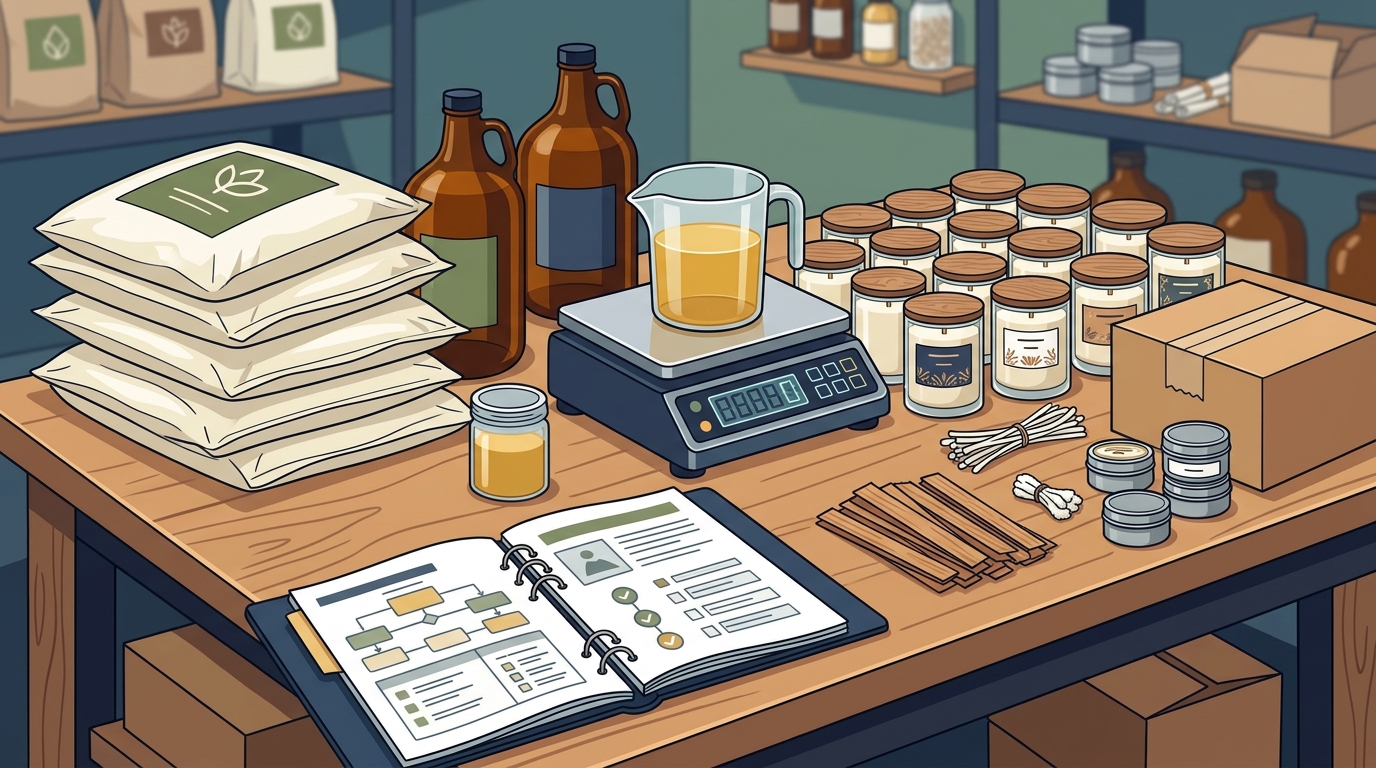
As you transition from hobby to business, safety and compliance become paramount. Candle making involves handling hot liquids and flammable materials. Adhering to safety standards protects you, your customers, and your brand reputation. Proper ventilation and protective gear are necessary during the production process. Understanding the flash point of your fragrance oils is also critical for safe mixing.
Labeling requirements vary by region but generally include ingredients, warnings, and burn instructions. Clear labeling builds trust with customers and ensures legal compliance. Many businesses invest in professional testing services to verify burn times and safety. This step is crucial for liability protection and product quality assurance. Review shipping and lead times to plan your production schedule effectively.
Testing Protocols
Rigorous testing ensures that your candles perform as expected. Burn tests should be conducted in various container sizes and shapes. Documenting burn times, soot levels, and scent throw helps you refine your recipes. Consistency is key to customer retention. If a customer loves a candle, they expect the next one to perform identically. Establishing a standard operating procedure for testing streamlines this process.
Pricing and Profit Margins
Pricing your candles correctly is vital for long-term sustainability. Many new business owners underprice their products, leading to financial strain. Your price must cover materials, labor, overhead, and desired profit. A common formula involves multiplying the cost of goods sold by a factor of two or three. This ensures that you have enough margin to cover marketing and operational costs.
Consider the perceived value of your brand. Luxury packaging and unique scents allow for higher price points. However, you must remain competitive within your niche. Researching competitor pricing provides a benchmark for your own strategy. Offering tiered pricing or bundle deals can also increase average order value. Understanding your checkout process helps you optimize for conversions and revenue.
Cost Analysis
A detailed cost analysis prevents unexpected losses. Include the cost of wicks, labels, boxes, and shipping materials. Labor costs should be calculated based on the time spent on each candle. Overhead expenses such as utilities, website hosting, and insurance must also be factored in. Regularly reviewing your costs allows you to adjust prices as needed. This proactive approach protects your bottom line.
Building Brand Identity
A strong brand identity distinguishes your candles from competitors. Your logo, color palette, and packaging should reflect your brand's personality. Consistency across all touchpoints builds recognition and trust. Storytelling is a powerful tool in branding. Share the journey of your business and the inspiration behind your scents. Customers connect with brands that have a genuine narrative.
Social media is an essential platform for brand building. Visual platforms like Instagram and Pinterest are ideal for showcasing your products. High-quality photography and engaging content can drive significant traffic to your store. Engaging with your audience through comments and stories fosters community. Consider collaborating with influencers who align with your brand values. This strategy can expand your reach and attract new customers.
Packaging Design
Packaging is the first physical interaction a customer has with your brand. It should be both protective and aesthetically pleasing. Sustainable packaging options are increasingly important to consumers. Using recycled materials or reusable containers can enhance your brand image. Unboxing experiences can also be a powerful marketing tool. Including a thank you note or care instructions adds a personal touch.
Sales Channels and Distribution
Choosing the right sales channels is crucial for reaching your target audience. An e-commerce website provides full control over your brand and customer data. Marketplaces like Etsy offer access to a large existing audience but come with higher fees. Wholesale to local boutiques can increase volume but reduces per-unit profit. Diversifying your sales channels mitigates risk and maximizes revenue potential.
Optimizing your online store for search engines is essential for organic growth. Use relevant keywords in your product descriptions and blog content. High-quality images and detailed specifications improve conversion rates. Offering free shipping thresholds can encourage larger orders. Many suppliers, including Makesy, offer free domestic shipping on orders over a certain amount, which can be passed on to customers.
Wholesale Strategy
Entering the wholesale market requires a professional approach. Prepare a line sheet that showcases your products, pricing, and terms. Research boutiques that align with your brand aesthetic. Building relationships with buyers is key to securing wholesale accounts. Offering competitive wholesale pricing allows retailers to make a profit while maintaining your margins. Clear communication and reliable fulfillment are essential for long-term wholesale success.
Key Takeaways
- Market Growth: The candle industry is expanding, with a significant increase in demand for eco-friendly products.
- Supply Chain: Partnering with reliable suppliers like Makesy ensures consistent quality and timely delivery.
- Safety First: Adhering to safety standards and proper labeling is non-negotiable for business compliance.
- Pricing Strategy: Calculate all costs, including labor and overhead, to ensure healthy profit margins.
- Brand Story: Authentic storytelling and visual consistency build a loyal customer base.
- Digital Presence: Social media and SEO are critical for driving traffic and sales online.
- Diversification: Utilizing multiple sales channels, including wholesale and e-commerce, reduces business risk.
Frequently Asked Questions
What are the essential supplies for starting a candle business?
You need high-quality wax, wicks, fragrance oils, containers, and a melting pot. Sourcing these from a reputable supplier like Makesy ensures consistency.
How do I price my candles for profit?
Calculate the cost of materials, labor, and overhead. Multiply the total cost by a factor of two or three to determine the retail price. This ensures you cover expenses and make a profit.
Is candle making a profitable business?
Yes, it can be highly profitable if managed correctly. Low material costs and high perceived value allow for strong margins. Success depends on effective marketing and brand building.
What safety regulations apply to candle making?
You must follow labeling requirements, including warnings and ingredients. Proper ventilation and fire safety protocols are essential during production. Testing your candles for safety is also recommended.
How can I market my candles effectively?
Use social media platforms like Instagram and Pinterest to showcase your products. Create engaging content that tells your brand story. Collaborate with influencers and offer promotions to attract new customers.
Where can I find wholesale candle supplies?
Online retailers specializing in craft supplies are the best source. Look for suppliers that offer bulk discounts and reliable shipping. Makesy provides a wide range of wholesale options.
What is the average burn time for a soy candle?
Burn time varies based on wax type, wick size, and container. Generally, a well-made soy candle can burn for 40 to 60 hours. Proper wick selection is crucial for achieving this duration.
Do I need a business license to sell candles?
Yes, most jurisdictions require a business license and possibly a home occupation permit. Check local regulations to ensure you are compliant. Liability insurance is also highly recommended.
Start Your Business Today
Transitioning from a hobby to a profitable business is an achievable goal with the right resources and strategy. By sourcing high-quality materials, adhering to safety standards, and building a strong brand, you can succeed in the competitive candle market. Explore the extensive range of supplies available at Makesy to kickstart your journey. Visit our collections page to find everything you need to create exceptional candles.