

Every candle maker eventually faces the same frustration: the fragrance smells incredible in the bottle, but once poured and lit the scent barely reaches the next cushion. The culprit is almost always the wax. Different waxes absorb, bind, and release fragrance oil in dramatically different ways, meaning your choice of wax is the single biggest lever you can pull to improve scent throw.
This comparison breaks down the most popular container-candle wax categories side by side—scored on hot throw, cold throw, fragrance capacity, ease of use, and sustainability—so you can pick the right foundation for room-filling candles.
What Exactly Are Hot Throw and Cold Throw?
Before comparing waxes it helps to define the two metrics candle makers use to judge fragrance performance. Cold throw is the fragrance you detect when a candle is unlit and sitting on a shelf. Hot throw is the fragrance released into the air while the candle burns. A truly impressive candle delivers both: an enticing cold throw that sells the candle and a powerful hot throw that fills a room.
Several variables influence each metric—fragrance oil quality, wick sizing, cure time, and pour temperature—but the wax itself sets the ceiling. A wax that cannot hold a high fragrance load or that burns too slowly to form a full melt pool will cap your scent performance no matter how premium the oil.
The Contenders: Five Wax Types Compared
1. Coconut-Soy Blends
Coconut-soy blends have rapidly become the go-to for makers who want strong scent and a natural label. Coconut wax is prized for its clean, slow burn and exceptional ability to project scent. When blended with soy, you get added structural stability and lower cost while the coconut component boosts the fragrance load and produces a creamy, smooth finish.
Makesy's Virgin Coconut Soy wax is the brand's number-one seller for exactly this reason. It is a clean-burning, non-toxic blend with exceptional adhesion and scent throw, suitable for container candles and tarts. The blend is gluten-free, toxin-free, paraben-free, phthalate-free, and made from renewable sources with only FDA-approved waxes.
Scent throw rating: 8.5/10
Best for: Makers who want a premium, natural-leaning wax that does not sacrifice fragrance power.
2. Coconut-Apricot Blends
Coconut-apricot wax takes the coconut base and adds apricot kernel oil for a softer hand-feel and slightly lower melt point, which helps the melt pool form faster and releases fragrance sooner after lighting. This faster pool development can translate into a noticeably quicker hot throw compared with pure soy.
Makesy's Coco Apricot Crème is a vegan blend of natural apricot, coconut, soy, and a minuscule amount of highly refined food-grade paraffin. It provides excellent hot and cold scent throw with strong glass adhesion.
Scent throw rating: 9/10
Best for: Luxury and artisanal brands where fragrance performance is a core selling point.
3. Soy-Paraffin Hybrids (Parasoy)
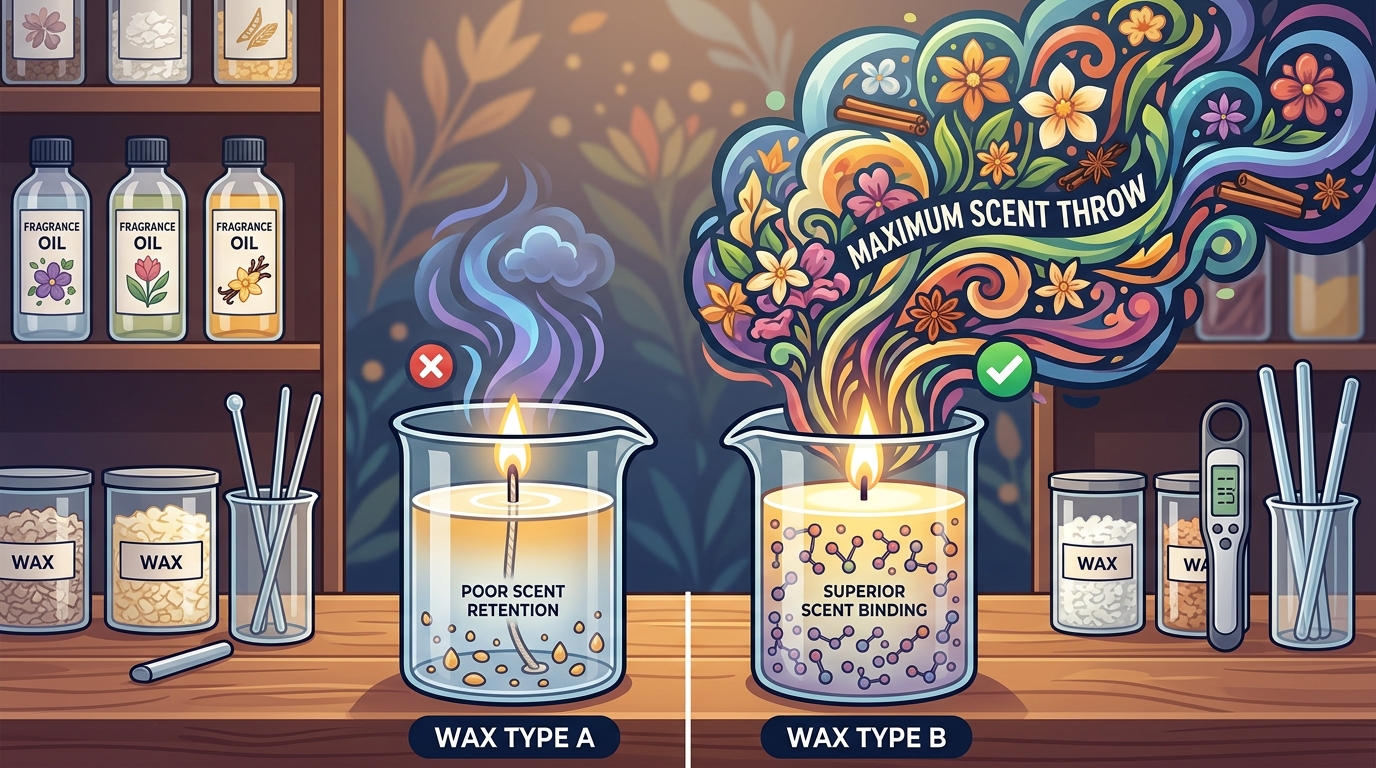
Parasoy blends aim to capture the clean-burn reputation of soy alongside the superior scent projection of paraffin. A common ratio is 70% soy to 30% paraffin, which gives you a slower burn from the soy component while the paraffin fraction lifts the hot throw.
Makesy's Deluxe Satin Soy falls into this category—a beginner-friendly, single-pour wax made from natural soy and food-grade paraffin. Its hybrid molecular structure mixes polar and non-polar molecules, improving fragrance compatibility and cold throw even when the candle is unlit.
Scent throw rating: 8/10
Best for: New makers seeking an affordable, forgiving wax with solid scent performance.
4. 100% Soy Wax
Pure soy remains the most widely used natural wax for container candles. It burns cleanly, produces minimal soot, and is renewable. However, soy is known to be more selective about which fragrance oils perform well in it. Soy absolutely needs a one-to-two-week curing period for the fragrance oil to properly bind, and skipping that step is the number-one reason for a weak hot throw.
Scent throw rating: 6.5/10
Best for: Eco-focused brands willing to invest in longer cure times and careful fragrance pairing.
5. Paraffin Wax
Paraffin delivers the strongest raw scent throw of any single wax type. It can handle fragrance loads of 10% or more by weight without sweating, and its lower melt point means it liquefies quickly, releasing aroma faster. Paraffin needs less fragrance oil to produce the same strong scent throw compared with plant-based alternatives.
The trade-off is sustainability: paraffin is petroleum-derived and more prone to sooting if the wick is incorrectly sized. Consumer preference is shifting toward eco-friendly and natural candle products, so many makers now reserve paraffin for small additions to natural blends rather than using it as the sole wax.
Scent throw rating: 9.5/10
Best for: Maximum-fragrance-first projects, mass-market candles, or strategic blending with natural waxes.
Side-by-Side Comparison Table
| Wax Type | Hot Throw | Cold Throw | Typical Fragrance Load | Cure Time | Sustainability |
|---|---|---|---|---|---|
| Coconut-Soy Blend | ★★★★☆ | ★★★★☆ | 9–10% | 7–14 days | High |
| Coconut-Apricot Blend | ★★★★★ | ★★★★★ | 9–10% | 7–14 days | High |
| Parasoy (Soy-Paraffin) | ★★★★☆ | ★★★★☆ | 8–10% | 3–7 days | Medium |
| 100% Soy | ★★★☆☆ | ★★★☆☆ | 6–10% | 10–14 days | High |
| Paraffin | ★★★★★ | ★★★★★ | 10–12% | 2–3 days | Low |
Beyond Wax: Four Techniques That Amplify Scent Throw
- Nail the fragrance-add temperature. Adding fragrance oil at 180–185 °F is widely recommended—hot enough for proper dispersion and binding, cool enough to avoid burning off delicate top notes.
- Size your wick for a full melt pool. The right wick creates an edge-to-edge melt pool within about four hours of burning. A full pool means maximum surface area releasing fragrance into the air.
- Respect cure time. Natural waxes especially need time for fragrance molecules to fully bond with the wax matrix. Burning too soon is the most common reason makers misjudge a wax's true scent capability.
- Choose high-quality fragrance oils. Oils formulated with higher concentrations of aromatic compounds and lower solvent levels inherently throw stronger. Pair each oil with a wax that complements its chemistry.
How makesy Wax Blends Are Designed for Scent Performance
Makesy's wax lineup is engineered around the idea that you should not have to choose between clean ingredients and powerful fragrance. The experts at makesy source ethically responsible, non-toxic wax blends with exceptional adhesion and amazing hot and cold scent throws.
- Virgin Coconut Soy — the brand's best-selling blend, offering creamy texture, easy single-pour workflow, and reliable throw across a wide range of fragrance families.
- Coco Apricot Crème — a premium, vegan option with standout hot throw, ideal for luxury lines.
- Deluxe Satin Soy — a hybrid blend that combines paraffin's scent projection with soy's clean-burn appeal at a lower price point.
- Natural Beeswax Crème — a proprietary blend of beeswax, coconut, soy, and palm with a silky golden hue and a natural honey note that enhances fragrance throw.
All makesy waxes handle a 9–10% fragrance load, use only FDA-approved ingredients, and are free of toxins, parabens, and phthalates.
Key Takeaways
- Paraffin delivers the highest raw scent throw but lacks sustainability appeal. Coconut-based blends offer the best balance of natural credentials and fragrance power.
- Blending wax types—coconut with soy, soy with a touch of food-grade paraffin—lets you fine-tune throw, burn time, and finish simultaneously.
- Wax choice sets the ceiling, but pour temperature, wick sizing, cure time, and fragrance oil quality determine how close you get to that ceiling.
- Always A/B test: pour the same fragrance in two different waxes, cure them identically, and burn side by side to see real-world differences.
Frequently Asked Questions
Which single wax type gives the strongest scent throw in container candles?
Paraffin wax generally provides the strongest scent throw because it can handle high fragrance loads and its lower melt point helps it liquefy quickly, releasing aroma faster. However, many makers prefer coconut-based blends that approach paraffin-level throw while offering a cleaner, more sustainable burn.
How much fragrance oil should I add for maximum scent throw?
Most pre-blended container waxes can retain fragrance loads of 8–12%. Exceeding the manufacturer's recommended maximum can cause sweating, poor wicking, and safety issues, so always stay within guidelines. Makesy waxes, for example, are formulated to handle a 9–10% load comfortably.
Does cure time really affect scent throw?
Yes. Soy wax needs a one-to-two-week curing period for fragrance oil to properly bind with the wax. Testing a candle too soon is the top reason makers conclude a wax has weak throw when the real problem is insufficient cure time.
Can I mix two waxes together to improve scent throw?
Absolutely. Custom blends are common among professional candle makers. A popular starting point is 70% soy with 30% coconut, which extends burn time and projects scent better than either wax alone. Waxes like makesy's Coco Apricot Crème and Virgin Coconut Soy are pre-optimized blends that remove the guesswork.
What temperature should I add fragrance oil to melted wax?
Adding fragrance oil around 180–185 °F is a reliable sweet spot. Too hot and you risk burning off volatile top notes; too cool and the oil will not disperse and bind uniformly in the melted wax.